Split stitch embroidery makes a line with no bare cloth between the stitches. Pass the needle up through the middle of the last stitch’s thread, splitting it, then take it down just past that stitch’s end.
Each new stitch starts inside the one before it, so the overlapping stitches close the line into a continuous thread as you work.
The two close views here show the working thread looped below the stitch line, then the needle brought into the stitch before the pull.
Neither view shows how the first stitch was anchored or how the last one is finished. The source doesn’t give needle size, thread type, or fabric.
The preparation is small: a threaded needle and a piece of cloth that already carries one short stitch. A hoop helps hold the cloth steady, and a thread you can see against the cloth makes the checks below easier.
Split the thread of the stitch you just made
Hold the cloth so the last stitch lies across it in front of you. Bring the needle up from the back with its tip in the middle of that stitch’s thread, not at its end and not beside it.
As the tip comes through, the thread should sit on both sides of the needle. Draw the needle up until its eye clears the cloth, and leave the working thread slack underneath.
In the view below, the working thread loops below the blue stitch line.
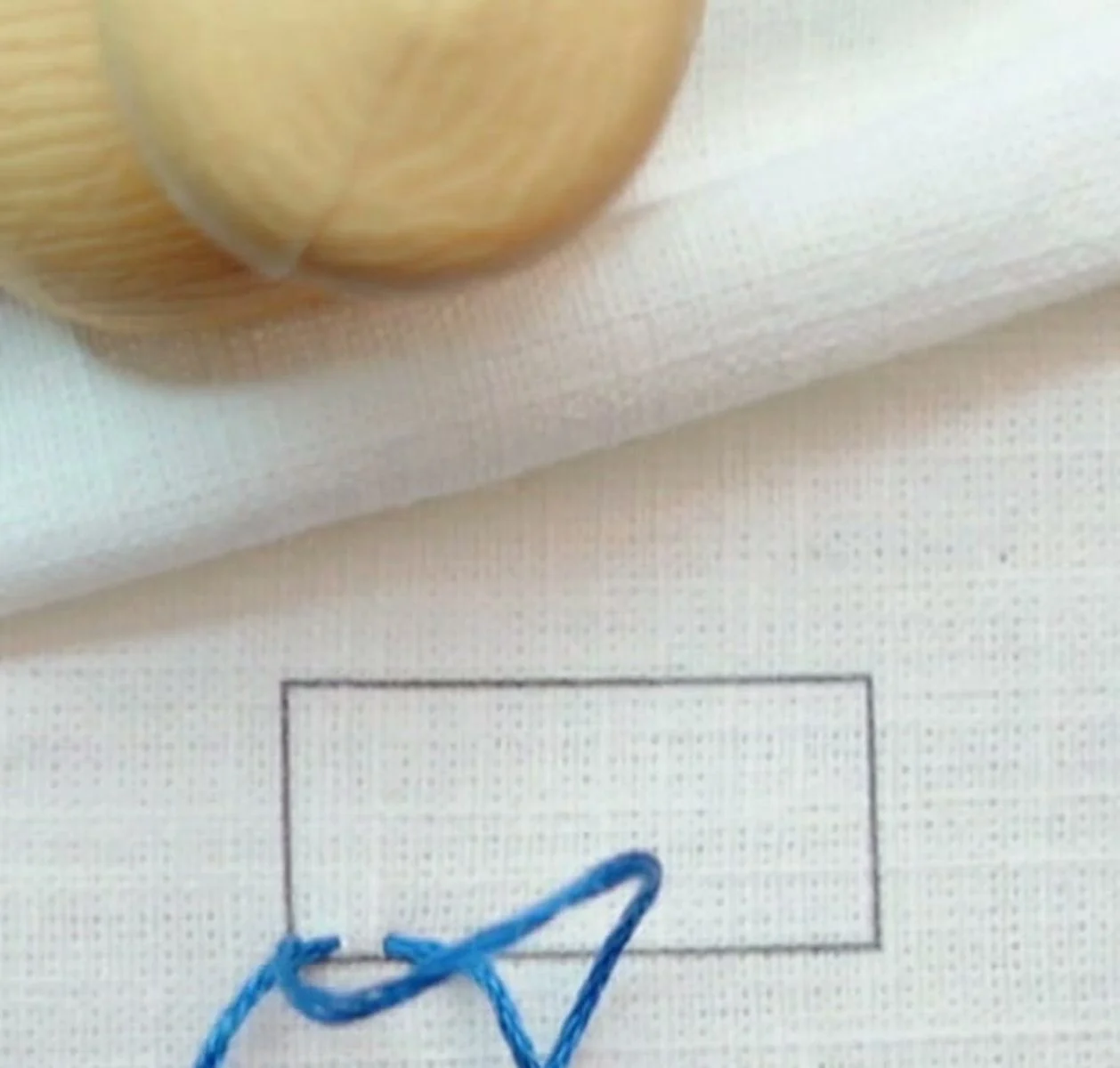
The split separates this stitch from a line of stitches that only sit next to each other. A stitch placed beside the last one leaves two threads side by side; when the needle passes through, the new thread crosses the old one.
How the ground cloth and the stitch names fit together is covered in the site’s Chinese embroidery guide.
Take the needle down beside the end of that stitch
With the needle and thread on the front, shift your hand along the line. Put the needle into the cloth just past the end of the stitch you have just split, and push it through to the back.
Draw the working thread from below until the new stitch lies flat on the cloth, then stop.
The point where the needle went down is the far end of the new stitch, so the distance between the two points is that stitch’s length. The point where it came up is now inside the stitch, and that is where the next one will split it.
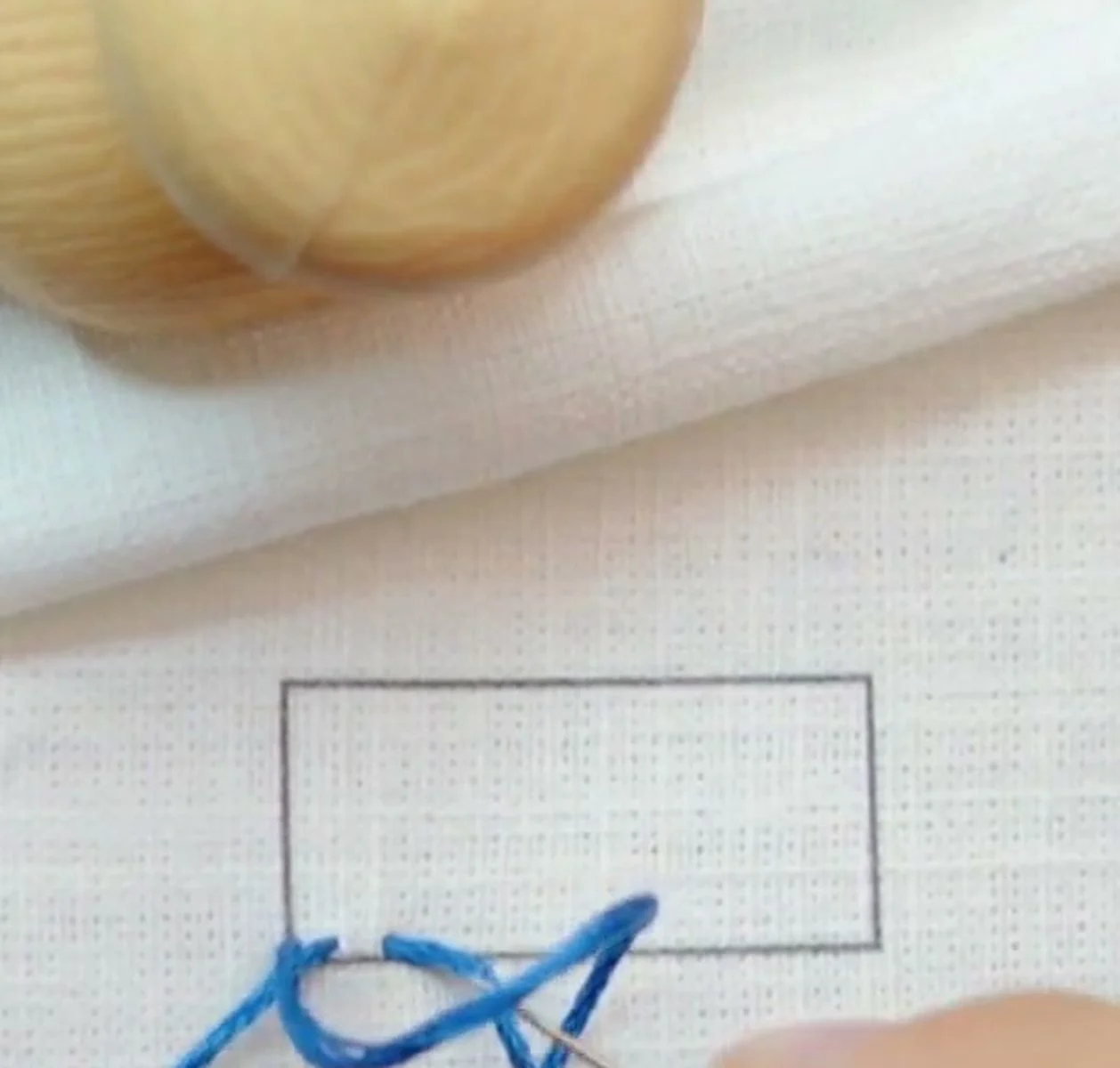
Repeat the move along the line
Bring the needle up through the middle of the new stitch, take it down just past its far end, and draw the thread through. Keep each stitch close to the length of the one before it.
A row that changes length stitch by stitch will look uneven, and no later stitch will hide that.
Because each stitch begins inside the previous one, the line closes as it goes. Look along the row: you’ll see thread meeting thread, with no cloth showing between the stitches.
That’s the check that the split is happening, and it works at arm’s length as well as close up.
A running stitch line is the useful comparison, since it shows separate stitches with gaps of cloth between them.
Before you pull the thread through, look at your two points. The up point belongs inside the last stitch, and the down point belongs just past its end.
If either has drifted, move the needle now. The adjustment costs nothing while the thread is still loose.
If the split misses or the line gaps
Each of these two faults shows on the front of the cloth, so you can catch it while the needle is still in the fabric.
The needle comes up beside the stitch, not through it
You see two threads lying side by side with cloth between them, and the new stitch sits alongside the old one rather than crossing it.
The needle went in outside the thread. Nothing was split. Bring it up again at the middle of the stitch and watch the thread part on both sides before you draw.
A strip of cloth shows between two stitches
The new stitch began past the end of the last one, so the overlap is missing. Take the up point back into the middle of the last stitch; the down point then falls just past its end again. The join closes.
Split stitch, 接针, and the stitches beside it
Chinese embroidery names this joined line 接针 (jiē zhēn), the joining stitch. In English the stitch is named for the split inside it: split stitch.
Chinese embroidery also names 滚针 (gǔn zhēn), a different line stitch. The views here show only the split line, so this guide doesn’t cover it.
A close line can also come from stem stitch, which is worked differently: the needle comes up beside the last stitch rather than through its thread.
The finished lines can look similar, so it’s the action at the needle that tells them apart, not the surface appearance alone.
Suzhou embroiderers I have watched take the needle through the thread of the stitch before it, the same move shown above.
A chain stitch line instead passes each loop through the last, so its surface reads as a series of links rather than a split.
A split line is what you’re after when an outline has to read as one unbroken thread. The views here show one line on one piece of cloth, and they do not show the stitch used to fill a shape.
Image credit: the close-up frames come from SUNNY SIDE UP’s split stitch video on YouTube, used under CC BY.