Chinese embroidery covers traditions of decorating a fabric ground with needle and thread, from embroidered clothing to pictures made for display. Su, Xiang, Shu, and Yue are four well-known regional names within that wider field. A stitch name, such as chain stitch, describes how thread forms a shape on the cloth.
Those names become easier to use when there’s something to look at. We’ll begin with the fabric and stitches, place the regional names, then follow the thread back to clothing, materials, and the next question to ask. The practice samples show stitch shapes; they don’t identify a regional school.
Embroidery begins with stitches on a fabric ground
The ground is the cloth supporting stitches. In the red sample below, the white cloth is the ground and the small raised dots are the embroidery. The dark guide lines belong to the practice layout, so read them apart from the thread.
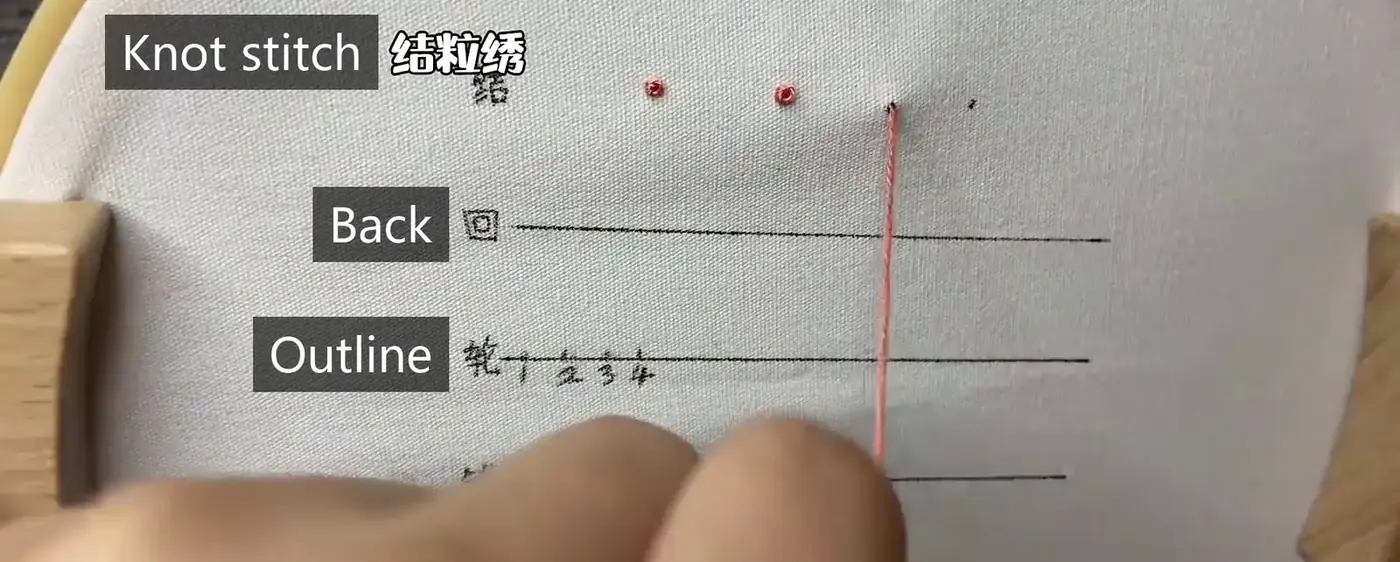
The Chinese word cixiu (刺绣) means embroidery. ChinaCulture describes colored thread worked through a fabric ground. A woven design forms as cloth is made; embroidery is added to an existing ground. The traditional Chinese textiles guide places both techniques alongside material choices.
A label can name the cloth, the stitching, and the finished object without repeating itself. “Embroidered silk robe” contains all three. For the wider garment names, the guide to traditional Chinese clothing separates robes, ensembles, and forms of dress before examining their details.
Su, Xiang, Shu, and Yue: four regional embroidery names
Regional names add a place and a craft tradition to those basic terms. ChinaCulture groups Su, Xiang, Shu, and Yue as China’s four famous embroideries. The names are useful search terms, but they aren’t four stitches or four materials that a loose length of thread can reveal.
| Name | Place linked to the tradition | What the name helps you find |
|---|---|---|
| Su embroidery (苏绣, suxiu) | Suzhou and nearby parts of Jiangsu | Suzhou makers, museum records, and teaching |
| Xiang embroidery (湘绣, xiangxiu) | Hunan | Work described within the Hunan tradition |
| Shu embroidery (蜀绣, shuxiu) | Chengdu and nearby parts of Sichuan | Sichuan stitch work and its local records |
| Yue embroidery (粤绣, yuexiu) | Guangdong | Work linked to places within Guangdong |
Start with those places when reading a label, then look for a maker, workshop, or object record. A flower alone won’t give a place. Different makers can stitch the same subject, and a regional tradition can contain more than one way of working it.
The wider field also includes the work of distinct communities. UNESCO’s record of Li textile techniques describes women in Hainan making clothing and daily necessities through spinning, dyeing, weaving, and embroidery. The record names cotton and hemp. The familiar four-name list leaves much of that textile world outside its frame.
Double-sided embroidery answers another question: the work has two faces to view. UNESCO’s Li record includes double-face work alongside ways of weaving. Calling a piece double-sided tells you how it can be viewed; where it was made needs its own evidence.
Embroidery lines, loops, and knots reveal different structures
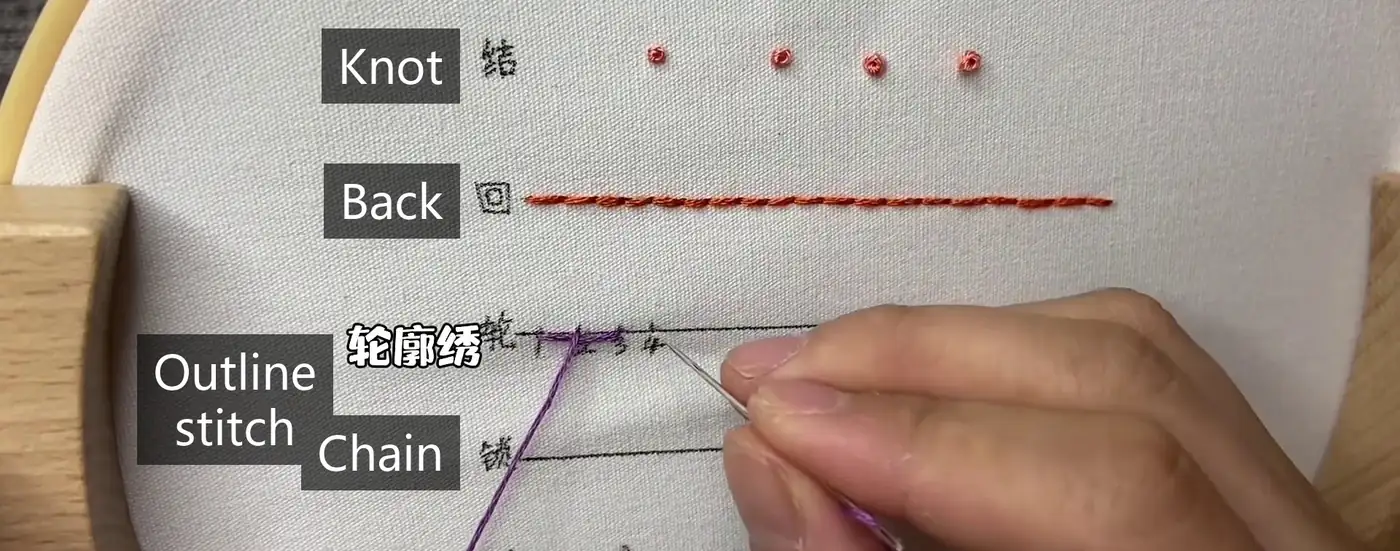
The thread’s shape gives a closer view of the work than a regional name can. Compare the raised red knots with the purple line below. The knots form separate points; the purple stitches join into a narrow row. Even before learning their needle paths, the two surfaces look distinct.
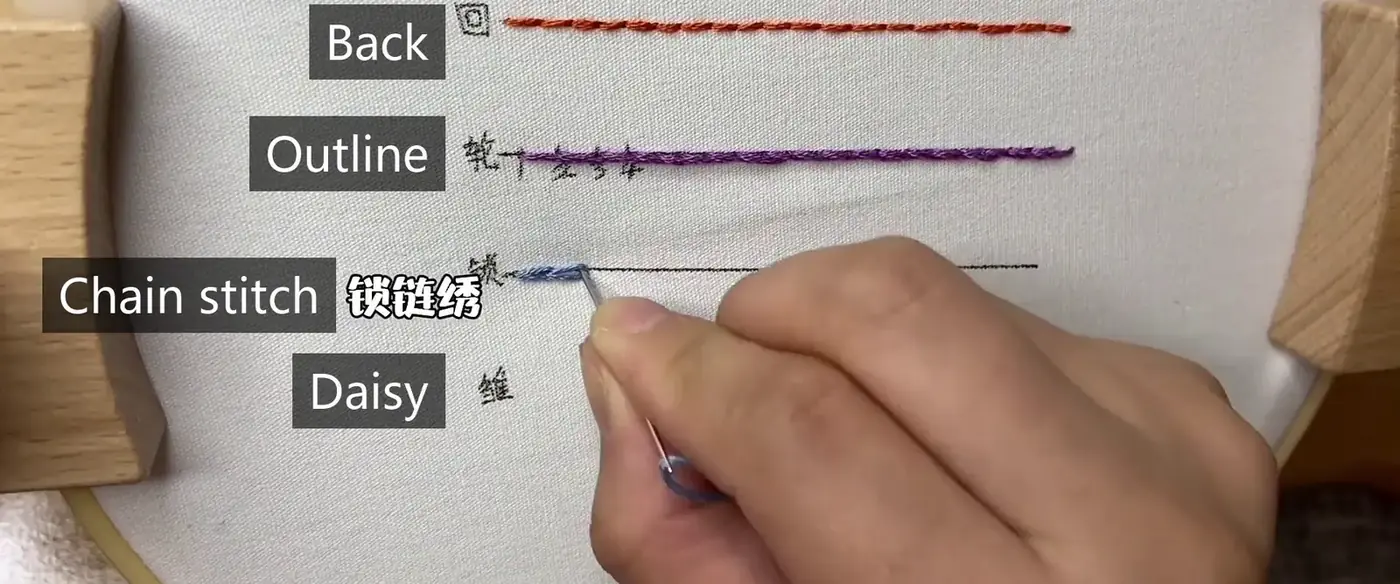
In the blue row, small linked loops remain visible along the line. That’s the feature to compare with the purple row above it. A chain can make a line too, but its repeated openings give that line a different surface. The sample lets you compare the shapes on the same white ground.
These stitch shapes aren’t proof of Chinese origin. The V&A’s account of Indian embroidery, for example, describes chain-stitching in ari work. When comparing textiles, keep the thread’s visible shape and the recorded tradition as two separate clues.
How a piece is made and what garment it belongs to also need separate answers. A modern machine can stitch a design, but that alone can’t establish what kind of clothing carries it. The guide to hanfu and stage clothing explains why the way it’s made doesn’t settle that clothing label.
Chinese embroidery on robes and display pieces
A finished object puts those stitches to work over a larger surface. On clothing, decoration has a position: across the body, along a border, or around an opening. On a picture, it contributes to the image. Looking at the complete object reveals how the stitched areas relate to the spaces between them.
Seattle Art Museum’s Dragon Robe, object 90.2, dated around 1875, provides a concrete example. Its record names silk cloth, satin stitch, and couching with gold thread. Here, one robe brings a base material and more than one stitch technique together.
Satin stitches lie closely side by side. Couching secures a thread laid on the cloth with a second thread. These terms, explained in the V&A’s stitch glossary, describe how the surface is made; “satin stitch” should also be kept distinct from “satin” as a name for a weave.
The museum also identifies red bats and the character shou, meaning longevity, as wishes for good luck and long life on that robe. The interpretation belongs with the object and its record. A motif’s shape, its setting among other motifs, and the garment’s use all deserve attention when reading another piece.
Embroidery also belongs on objects made for display. ChinaCulture’s regional accounts include decorations for halls alongside clothing and daily-use objects. A framed embroidered picture and a worn robe can share needlework techniques while asking different things of the viewer: follow the picture’s image, or examine the decoration across a garment.
For a dress, retain the full silhouette alongside the embroidered detail. A close view of a flower won’t show the opening or hem. The guide to qipao shapes and details follows those parts of the garment, leaving the embroidery to be described in its own terms.
An embroidered motif does not identify the cloth
The robe’s museum record separates silk cloth from gold thread and stitching. Read a modern garment label the same way. “Silk embroidery” can leave a gap: does silk describe the ground fabric, the thread used to stitch the design, or both? Ask for both materials before comparing pieces.
Gloss is something we can see. Fiber content needs a source. The white practice cloth and colored thread here are visible, but their fibers haven’t been identified. Likewise, a gold-colored detail on a dress needs a material label before it can be called gold thread.
Fabric names add another layer. Silk names a fiber and satin names a weave; embroidery describes work added to the ground. The guide to silk fabrics used in hanfu follows the fibers, weave, finish, and layers through a clothing choice, with each answering a different question.
Where to take a Chinese embroidery question next
The next guide depends on the answer you need. Recognizing a stitch, making a first line of embroidery, and identifying a historical garment are different tasks. Choose a source that shows the missing evidence instead of expecting a regional name to answer all three.
| Your question | What to look for next |
|---|---|
| What stitch am I looking at? | A stitch comparison showing the thread’s shape clearly: separate dots, a continuous line, or linked loops |
| How do I begin stitching? | A complete beginner lesson that keeps fabric preparation, one small exercise, and finishing together |
| Which tradition does this piece belong to? | A named maker or collection record with a place and an explanation of the attribution |
| What does this motif mean on clothing? | The complete garment and a source that discusses that motif in its particular setting |
A short line exercise makes the thread’s path easier to follow than a finished embroidered picture. For an object you own, begin with its description and separate the claims about cloth, stitches, place, and date. Check each claim against the evidence that supports it.
A precise question helps when asking a maker or curator for more information: “Is the ground silk, and what thread forms the blue outline?” gives them something concrete to answer. “Is this Chinese embroidery?” leaves both the material and the tradition unresolved.