Embroidery is the craft of adding patterns to fabric or another base with stitches, usually worked with a needle and thread. The word also names the stitched work itself. A small flower shows both meanings: the act of making it and the thread design left on the cloth.
Embroidery meaning: the activity and the stitched work
The noun has two linked meanings. In “She enjoys embroidery,” the word names the craft. In “The cuff has blue embroidery,” it names the stitched design. Read the rest of the sentence to tell which sense is meant.
Merriam-Webster includes the craft and its result in the entry for this word. “To embroider” is the verb: someone stitches a design on a cuff, then calls the cuff embroidered. A “piece of embroidery” can mean the cloth with its stitched design, rather than a lone stitch.
For the physical meaning, start with the red and purple rows below. Colored thread lies over the pale cloth, while dark drawn guides remain exposed farther down. The guides mark shapes to follow; the thread makes the stitched pattern.
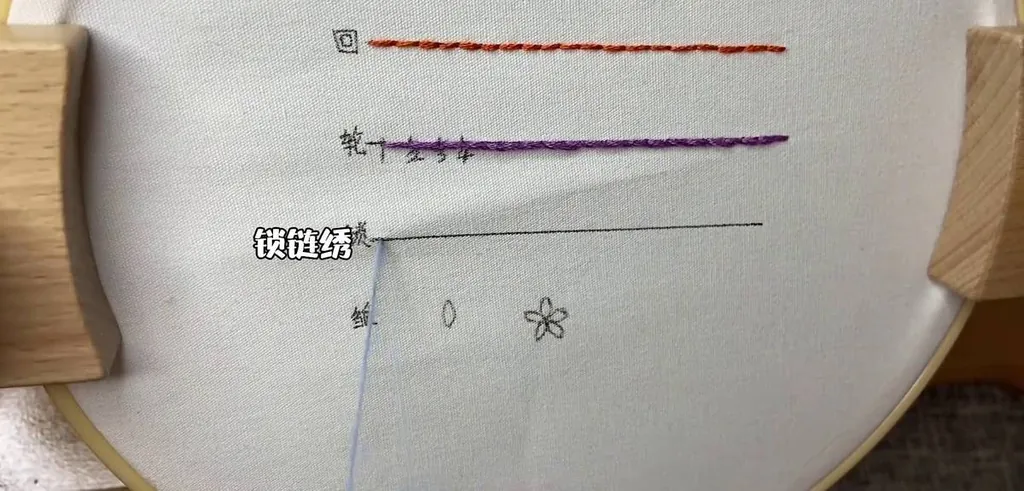
Fabric supports the embroidery; thread makes the design
The pale cloth under those rows is the base, often called the ground. Cloth and thread have separate jobs: the cloth gives a surface to work on, and the thread traces a pattern across it. Neither role tells us what fiber was used.
In the next view, yellow thread comes through the cloth beneath the colored rows. Follow it down the image. The loose length hangs away from the surface, while the point where it passes through the cloth shows where the thread begins the next shape.
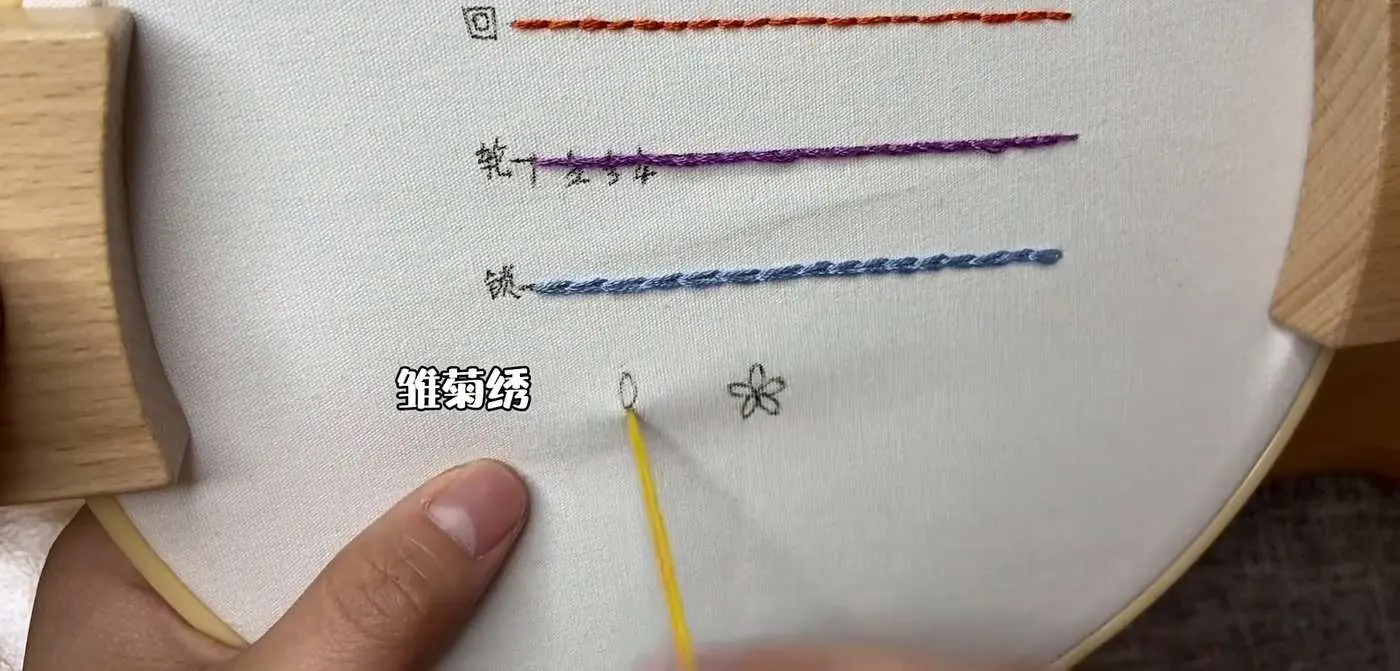
Stitches can be made by hand or machine. Both fit the definition. These views show handwork, but a label that says “embroidery” doesn’t tell us whether a person guided each stitch by hand or a machine was used to work the design.
The name of a regional tradition adds a further question: where does the work belong? The guide to Chinese embroidery and its regional names explains how terms such as Su and Xiang are used. Those names aren’t needed for the general meaning of the word.
A stitched flower shows what counts as embroidery
The loose yellow thread now has a visible result: loops form a flower beside the needle. Small gaps remain between the loops. The shape is easy to see even though the thread doesn’t cover the whole surface of the cloth.
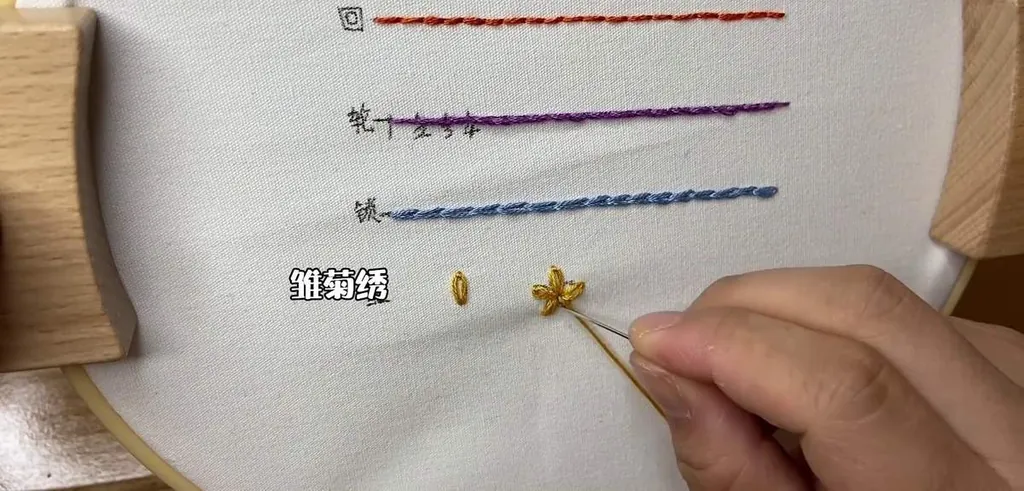
A flower is a subject; stitching is a way of making its shape. Look for thread and follow its path. Color or a floral outline alone won’t prove that a design is embroidered. Here, the yellow loops stand out from the pale cloth beneath them.
Embroidery and sewing describe overlapping work
The needle and thread in the flower also help explain how this craft relates to sewing. Sewing is a broader term. Stitches can join cloth, mend a tear, or form a pattern, so their role matters when deciding how to describe them.
Embroidery puts the focus on the pattern. A cuff can have a seam holding its edges together as well as stitched flowers across its face, with each set of stitches doing a different job on the same piece of cloth.
Weaving makes cloth by crossing threads over and under each other; embroidery adds stitched work to a ground. Printing puts a design on cloth with color. A fabric can carry more than one treatment, so judge the part you’re looking at.
For the sample here, pale cloth is the ground, colored thread forms the lines and flower, and a needle is used to work the stitches. The word names both the craft and the result you can see.