Jade is one word covering two different materials, and jadeite is the name of one of them. The other is nephrite. So jade vs jadeite compares a general word with one member of the group it covers, and the two members are separate minerals.
English spends jade on both minerals, on objects carved from either, and on a color that borrows the word. That habit is easy to learn and hard to unlearn.
A museum can file a white stone and a green one under the same heading and stay accurate, because the heading names a group rather than a mineral.
The museum label “Jade (nephrite)” holds both names at once
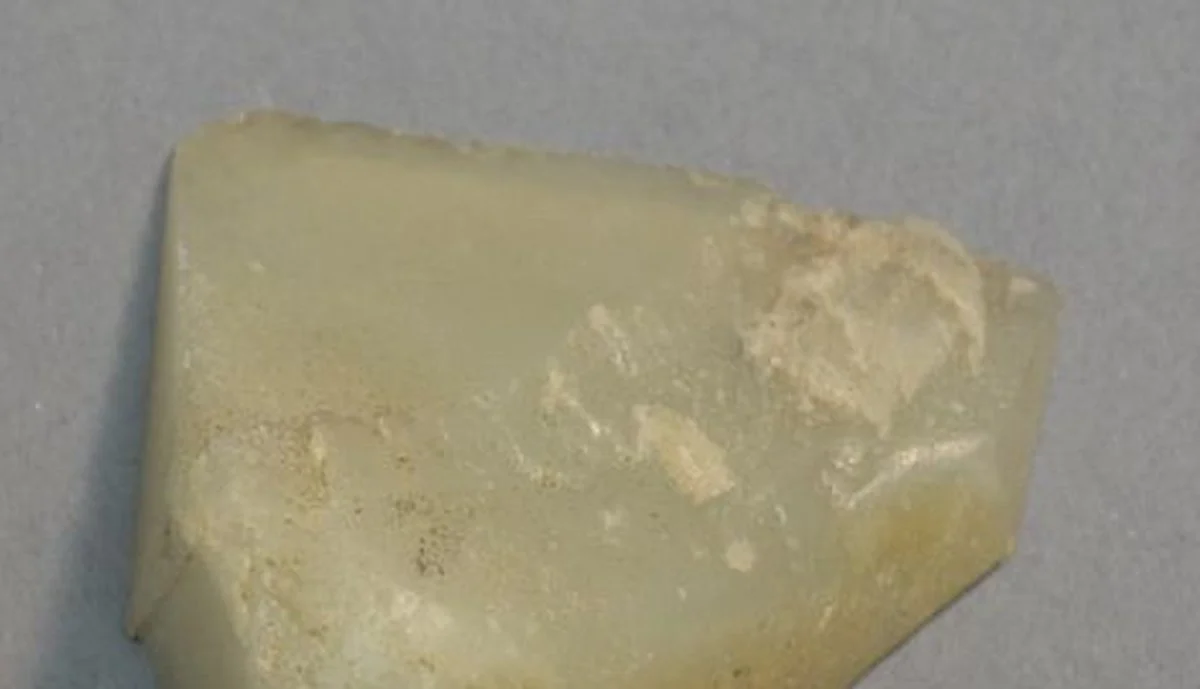
The Met’s record for object 62097 calls the piece a sample of Sinkiang white nephrite, and the medium field reads “Jade (nephrite)”. Read that field literally: jade is the wide term, and the bracket names the mineral sitting inside it.
Object 62117 gets a shorter label. Its medium field reads simply “Jadeite”, because jadeite is already the mineral name. The museum dates both samples to the 20th century, so the difference between the labels belongs to naming rather than age.
Both fields record material and leave value out. The two names sit at different levels of generality, and the wide one can attach to either mineral.
Nephrite and jadeite are two different minerals, not two grades
Nephrite belongs to the amphibole family and jadeite to the pyroxene family. Those are separate minerals rather than two varieties of one, which is the whole content of the distinction.
The comparison is about identity, then, rather than quality. Density and carving are two separate claims, and these labels stay silent on both. “Jade pendant” is an honest phrase that names the group and skips the stone.
The useful habit is small. When a label says jade, the mineral word is the part still missing. Nephrite or jadeite is the next question, and it decides which material you’re discussing.
Color is a weak test for jade and jadeite
Look at the three objects on this page. The nephrite sample is pale, almost waxy white. The jadeite pebble is brownish-green, with one face cut flat. The jadeite bowl (object 43858) is a mottled green.
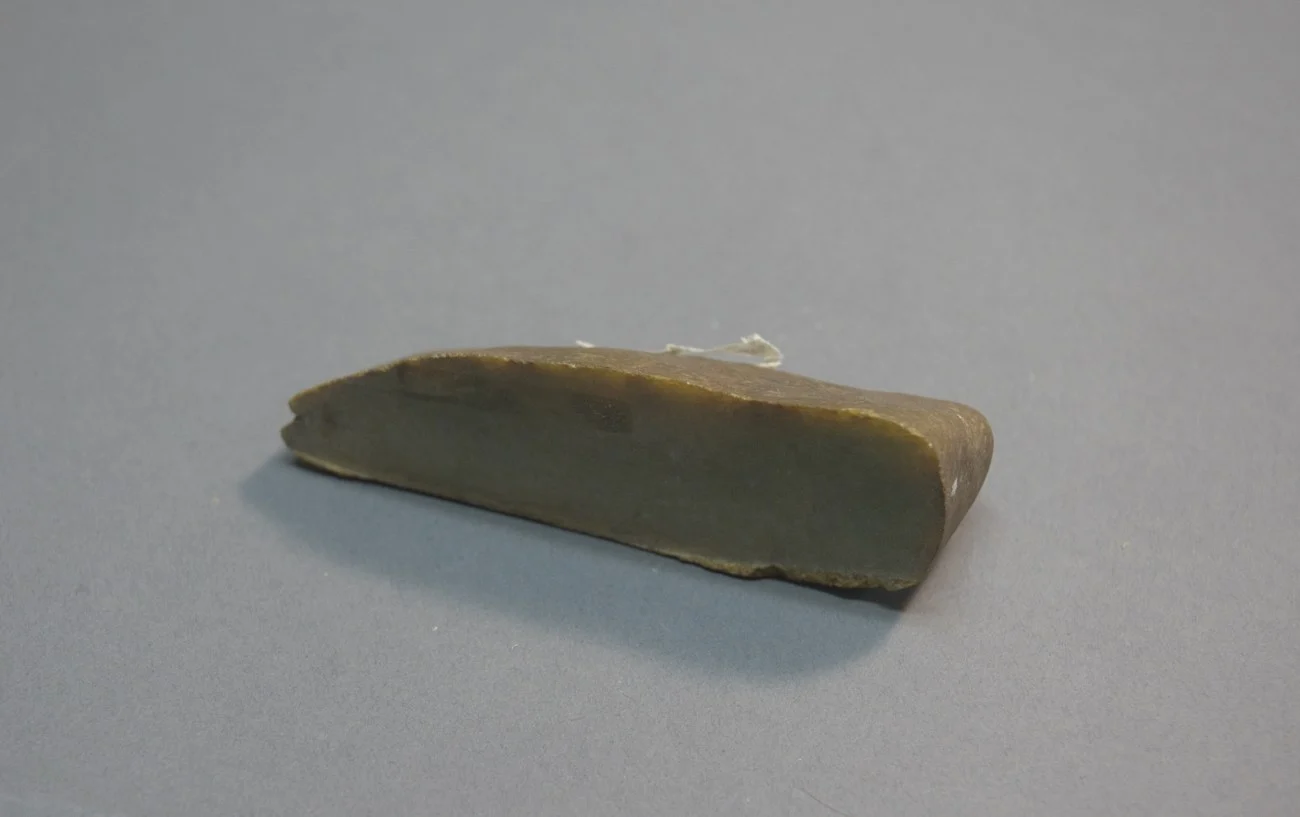
Two jadeite objects, two different colors, and the white nephrite sits outside both. A reader taught that jadeite means green would have to explain the pebble away, and the pebble carries the museum’s own identification.
A photograph settles only so much. It shows the cut face; the rounded sides keep their skin, and that skin may account for much of the brown-green. The pebble makes the narrow point well: its color would fail a simple jadeite-should-be-green rule, and the museum still identifies it as jadeite.
The Chinese words for jade and jadeite work at different levels
Chinese separates the two levels that English runs together. 玉 (yù) is the general word, close to what jade does in English: it can name the material or the object made from it. 翡翠 (fěicuì) is the specific word for jadeite.
The two words answer two different questions. Asking whether something is 玉 asks which category it belongs to. Asking whether it’s 翡翠 asks which mineral it is, and only the second question has one answer.
This mismatch travels in both directions. A translated label can render 翡翠 as “jade” and drop the mineral. A Chinese page can use 玉 for a stone a gemologist would call nephrite. Both wordings stay accurate at the level of category, and both leave the mineral question where it started.
What these records leave open about jadeite and nephrite
The Met dates the two samples to the 20th century; the bowl’s objectDate field is empty, while its period is Qing dynasty (1644–1911), Qianlong period (1736–95).
The nephrite sample’s label names Sinkiang, the older spelling of Xinjiang. The other two labels name a material and a form, and that is all they say.
Confirmation of an identification takes measurements and tests that these records leave out. Such tests exist, and their results sit outside this page. A photograph gives surface, shape, and color; that is a hint, and a hint is all it can give.
My own work is on dress structure, so the jade I meet in reconstruction arrives fixed to a garment — a bead, a plaque, or a clasp — and my questions are about how it sits and what holds it. The mineral name I leave to the record.
If you’re reading a label or a listing, the check is short. Find the mineral word. When the word is absent, the description has stopped at the category, whatever the photograph shows.