Hanfu (汉服, hànfú) names the traditional dress of the Han Chinese and, in present use, clothing made with those traditions in mind. It isn’t a single robe or a costume from only the Han dynasty.
The name can cover a top worn with a skirt, a long robe, and other pieces that changed across periods. To read an outfit, identify its garments and ask what evidence supports any historical label. A familiar silhouette won’t answer either question.
This page is the entrance to our hanfu collection. It begins with the clothes themselves, then separates garment names from period names and surviving objects from modern interpretations. The collection’s more specific guides examine definitions, individual forms, and wearing choices in greater detail.
Hanfu names a dress tradition, not a single silhouette
The word hanfu points to a people and a dress tradition. The Han in the name refers to the Han Chinese; fu means clothing.
Hanfu is one named tradition within traditional Chinese clothing, not a label for every dress tradition in China.
A dynasty label answers a different question: it places an object or a modern design in a historical frame.
A garment described as Ming style is still a particular garment, with a particular cut, made at a particular time. Its period label starts an inquiry into that garment; it doesn’t complete the description.
The range matters because even a focused museum exhibition refuses to fit the clothes into one outline. The China National Silk Museum’s Han and Wei exhibition describes robes, short upper garments, long skirts, and several sleeve shapes.
Its description brings excavated textiles together with dressed pottery figures. Those are useful ways to see variation, but they don’t make every outfit of those centuries look alike.
Think of hanfu as the start of a description. After the name, ask what pieces are present, which period the label names, and whether the clothes in front of you are old objects, reconstructions, or recently made designs. Those answers say more than a broad label can.
Start with the pieces in a hanfu outfit
A hanfu outfit may combine separately made garments or center on a robe. Look for the upper garment’s lower edge and the skirt’s waistband before deciding which you are seeing. An outer layer or sash can cover the join.
A front view may show the collar clearly while leaving the waist, side openings, and back of the garment unresolved. Another view can reveal the join that the front hides.
The China National Silk Museum’s exhibition In Praise of Silk gives a useful contrast. It describes a replica of a curved-hem robe based on a Mawangdui excavated object, then a top-and-skirt ensemble made with evidence from another setting.
Each outfit raises a construction question. Does one long garment provide the main body, or do separate upper and lower pieces meet at the waist? The answer changes where you look for a seam.
Once you can name the pieces, details become easier to place. A wide sleeve belongs to an upper garment or robe; a pleated section belongs to a skirt; a belt may sit over either arrangement.
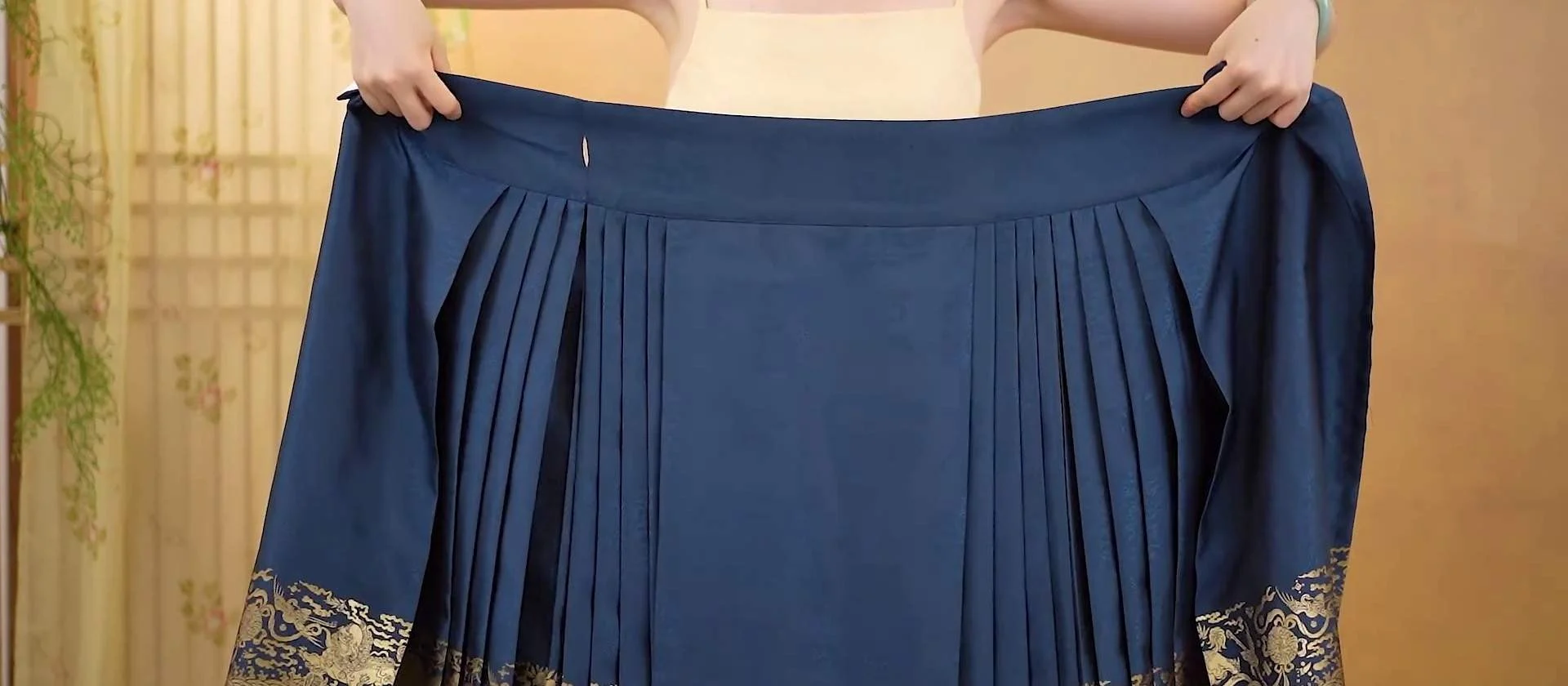
Color and embroidery can be striking, but they cannot reveal a hidden seam. When a picture cuts off at the waist, leave the unseen construction open rather than guessing the whole outfit from its neckline.
Garment names and dynasty labels answer different questions
Names such as ruqun (襦裙), a top-and-skirt arrangement, and shenyi (深衣), a robe form with joined upper and lower parts, direct attention to the clothing being discussed.
A period name such as Han or Ming places an example in time or indicates the period a modern maker is drawing on. It doesn’t tell you every piece in the outfit.
The silk museum’s exhibition records make that distinction practical. Its Wei and Jin example is a reconstructed short top with a long skirt; its Ming example includes an upper garment and skirt.
In the museum’s separate Han and Wei exhibition, shenyi appears alongside other garments and sleeve forms. A period can hold several ways of dressing, while a garment name leads you toward a construction detail.
For a fuller identification, use both kinds of information: the named piece, followed by the date and kind of evidence behind it. A shop’s “Tang style” or “Ming style” tag is a historical reference claimed for a new product.
Inspect the garment’s pieces and the maker’s sources before accepting that reference. Our form guides take those distinctions further, one clothing question at a time.
What can a surviving garment show?
An old garment can preserve cloth, stitching, dimensions, and wear in ways a picture cannot. A pottery figure can show a dressed outline and how an artist represented layers, yet it may conceal the seams beneath them.
A painting offers another kind of view. Reading hanfu history means keeping these sources beside one another without asking any single one to prove an entire wardrobe.
The China National Silk Museum’s Han and Wei exhibition explicitly uses both textile objects and painted figures. That pairing is helpful: the figure shows clothing on a body, while the textile allows closer study of material and construction.
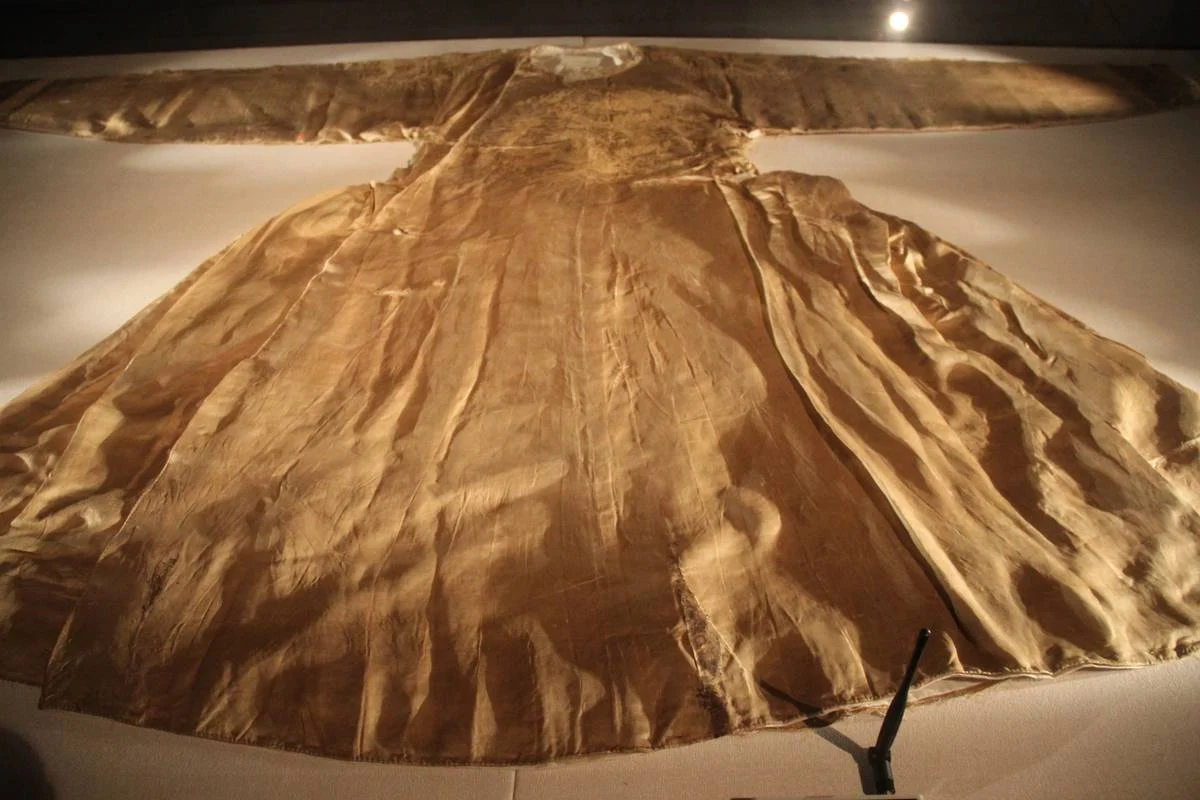
Their evidence overlaps, but it isn’t identical. A silhouette suggested by a figure may need a surviving garment or another source before its cut can be described confidently.
Conservation also changes what a visitor can examine. The museum’s account of garments from the Kong family archive in Qufu lists robes, a skirt, and short upper garments. It describes repairs to fragile gauze pieces, including support beneath damaged fabric.
That record tells us something precise about those objects and their condition; it cannot, by itself, tell us what everyone in Ming China wore.
A replica and a modern hanfu make different claims
A reconstructed garment can be a serious attempt to work from historical evidence, but it is still newly made. In the silk museum’s In Praise of Silk exhibition, one replica follows an excavated robe, while another draws on both a mural and excavated dress.
The first has a particular surviving object behind it; the second brings more than one kind of source into a new garment. Their labels tell the visitor where to start checking the reconstruction.
A modern hanfu outfit may make a different choice. Its maker might retain a garment form, alter its proportions for present wear, choose a new fabric, or combine pieces for a contemporary setting.
The historical reference and the new garment deserve separate descriptions. Saying “inspired by a Ming garment” makes a narrower, clearer claim than presenting a newly sewn outfit as an untouched historical survivor.
That distinction does not make present-day wearing less meaningful. The China National Silk Museum has held costume events that combine clothing explanation with themed wearing.
Universiti Malaya’s Museum of Asian Art has also presented hanfu through historical material and modern activities. In each setting, people can engage with dress today while asking what the older evidence actually supports.
Find the next hanfu guide by your question
The best next page depends on what remains unclear in the clothes you are looking at. If the word itself is unfamiliar, begin with the definition and the difference between historical dress and clothing made now.
If two labels seem to name the same outfit, move to a form guide. Compare which one names a whole arrangement, a single piece, or the shape of an opening.
If you want to wear an outfit, the useful questions become more concrete: which pieces are separate, where they close, what goes underneath, and which views or measurements you need before choosing a size. A photograph of the front alone often leaves the side and back unanswered.
For historical study, start instead with the object or image a claim is based on, its date, and whether the garment shown is original or a reconstruction.
The collection index below will list guides that have actually been published. It is meant to grow as those guides are ready, so a topic named in this overview is a route for further reading, not a promise that every planned page is already online.