A Tang suit usually means a Chinese-style jacket with a front opening and fabric frog fastenings. The name tangzhuang (唐装, tángzhuāng) is used for the modern jacket; “Tang” in the name doesn’t date the garment to the Tang dynasty.
The jacket’s our starting point here. Its neckline, opening, sleeves, and hem help explain what the name refers to. Looking at a complete example and a fastening detail also separates questions about the garment from questions about its history, cloth, or place in an outfit.
What does Tang suit mean today?
In modern clothing descriptions, Tang suit generally means a jacket. A standing collar and knotted closures are familiar features of the style. The round-neck example below shows why the garment needs a fuller description than a collar label.
“Suit” can be misleading for an English reader expecting a matching jacket and trousers. Identify what the name is describing, then check which pieces belong to the outfit. A photograph of someone fully dressed and an offer for a single jacket answer different questions.
The wider guide to traditional Chinese clothing places the jacket alongside other clothing names. Keeping those names distinct gives a useful starting map:
| Name | The starting point for identification |
|---|---|
| Modern Tang suit | A Chinese-style jacket: examine the neckline, front opening, fastenings, and sleeves together. |
| Tang-period clothing | Clothing associated with a historical period: look for a particular garment and evidence for its dating. |
| Hanfu | A broader field of Han Chinese dress, including robes and separates, and clothes made today with those traditions in mind. |
| Qipao, also called cheongsam | A dress with its own history and construction; a similar fastening doesn’t turn a jacket into the same garment. |
For a historical clothing search, hanfu garments and their historical evidence offer a different route. Start with the period and garment being investigated. A modern Tang jacket can be described on its own terms without supplying it with an ancient making date.
Read a Tang jacket from neckline to hem
A complete front view shows how the jacket’s parts relate. In this pale patterned example, the neck opening curves around the dress form, three frog fastenings sit down the front, and blue-gray cuffs turn back beneath the sleeves. The hem marks the end of the jacket below the lowest fastening.
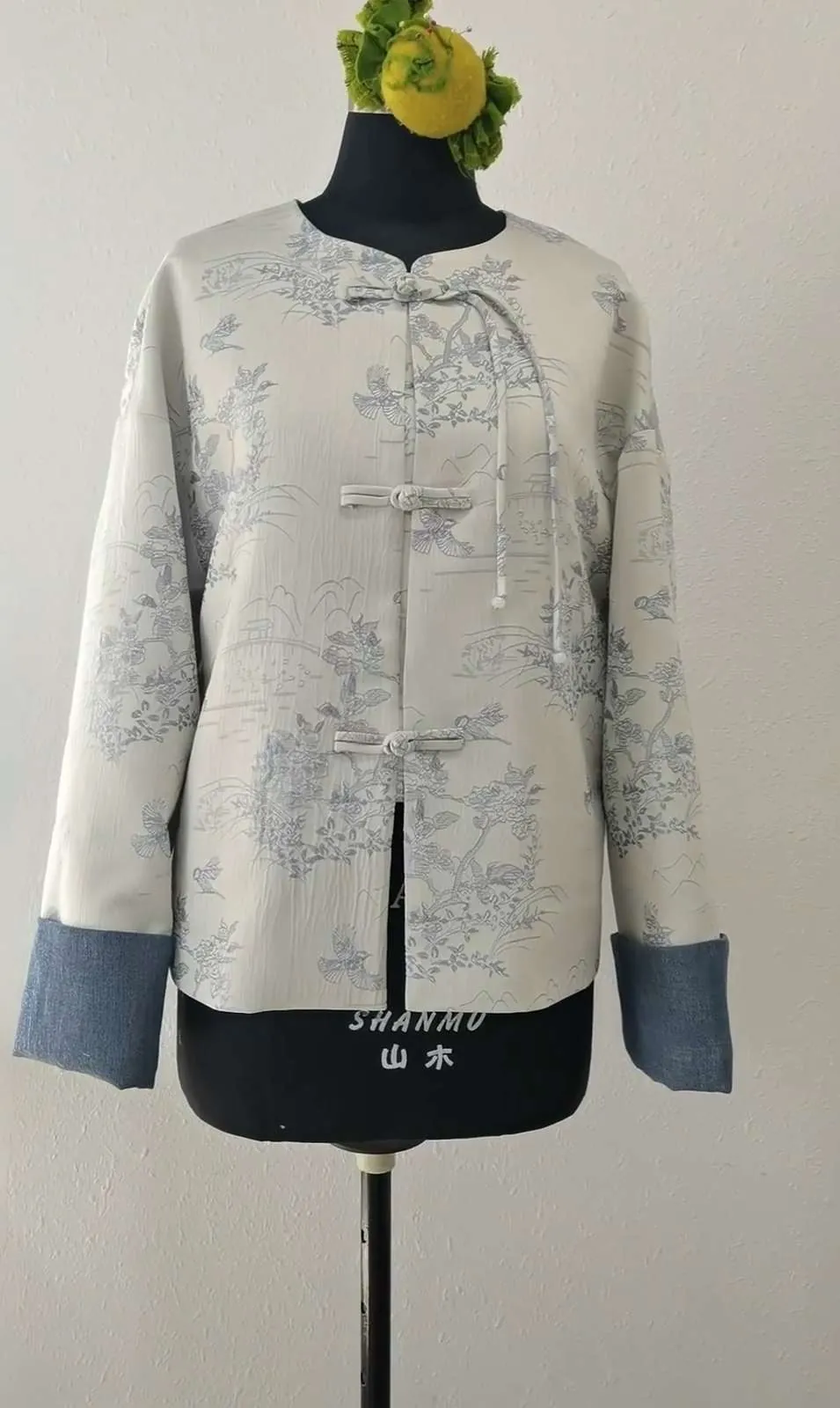
The neckline and front opening describe different parts of the clothing. The neckline surrounds the neck; the opening runs down the body. Follow the two front edges from the top fastening toward the hem, where the black dress form becomes visible between them. That gives the pale cloth a definite boundary.
The sleeves add another boundary. Their patterned cloth continues from the body, while the darker cuffs make a clear band at each wrist. Comparing the cuffs with the hem helps distinguish a contrasting part of the jacket from a separate garment underneath it.
Describe those visible parts before assigning a more specific name. Here, “round neckline, front opening, three fastenings, contrasting cuffs” records the actual jacket. It also gives a maker or seller a much clearer question than asking whether the design is simply traditional.
Frog fastenings on a Tang jacket: cloth and closure
The fastenings connect a small fabric component with the larger front opening. A frog fastening, also called pankou (盘扣, pánkòu), uses a knot and loop to close the garment. The knot provides something for the loop to hold; the fabric extending from it belongs to the fastening arrangement.
The pale jacket places its knots at separated points down the front. Between those points, the panel edges remain visible. Look at where the cloth meets as well as the knot itself: the two observations describe the garment’s opening and its fastenings.
Making a matching fastening needs a separate sequence for forming the fabric parts and attaching them to the fronts. A finished jacket helps locate those parts. It can’t show all the work between a loose strip and a finished closure.
A Tang jacket is one part of an outfit
Once the jacket’s boundaries are clear, the rest of the outfit becomes a separate decision. The dress form shows this outer garment from neck to hem. A worn outfit would add the person, any inner top, and the clothing below it, each contributing its own color and outline.
In the angled display, the bent sleeve brings one blue-gray cuff across the jacket’s lower front. Pale cloth continues below the hem. The changed pose shows how much an arm position can alter the outline even before a person wears the jacket.
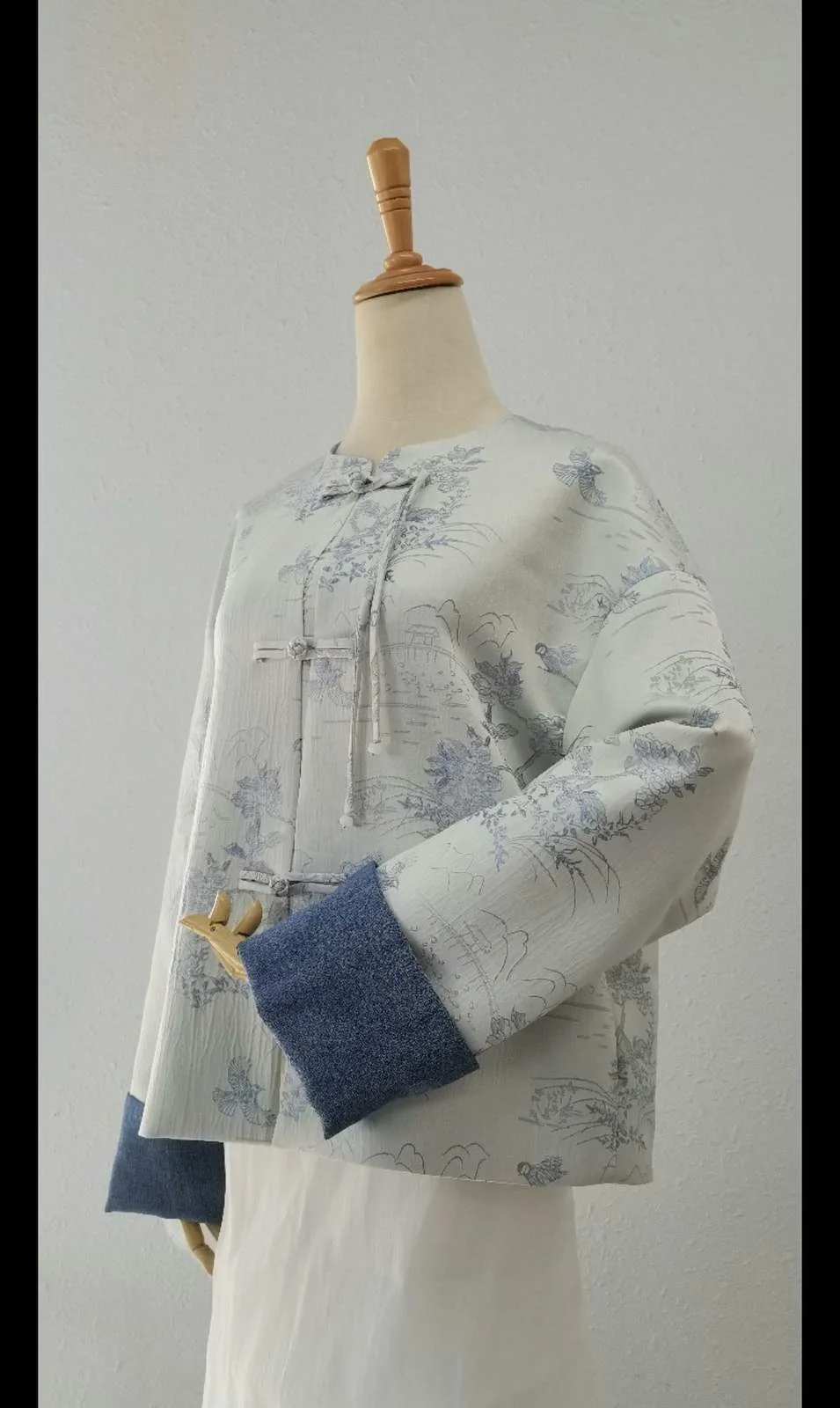
For a jacket to wear, decide which of those relationships matters first. An intended inner top raises a coverage question; a particular pair of trousers or a skirt raises a proportion question. A dress-form view is useful for seeing the jacket, while a worn view helps answer how those pieces look together.
The patterned surface raises a different question: what’s the cloth made from? A picture records color, pattern, and visible texture. A fiber statement or garment label supplies the material information. The distinction between fiber and fabric names is explained in the guide to silk fabric names, using hanfu examples.
Where to take your Tang suit question next
Different questions about the same jacket need different kinds of evidence. After identifying the modern garment, choose the part that remains unresolved. A name, a historical reference, a material description, and a purchase decision each take the reading in a different direction.
- For an unfamiliar clothing name, start with what hanfu means. It explains the wider term and its relationship to historical and newly made clothes.
- For a Tang-period attribution, look for the particular garment and its dated evidence. The modern jacket’s name supplies a search term, while the dating needs an object, image, or text behind it.
- For a women’s Tang jacket purchase, move from identification to the actual garment’s fastening, coverage, sleeves, and appearance on the wearer. Those are closer questions than the category name can settle.
The China in Threads home page provides the wider clothing and accessory routes. Keep the jacket’s complete front view beside its detail views as the questions become more specific: each new description should still point to a part of the garment that can be found.