Red hanfu brings a color associated with good fortune and celebration to Han Chinese dress. The color can appear on very different outfits: a broad sleeve covered with gold motifs and a long garment gathered by a belt can both be red.
Color, shape, and decoration answer different questions. Start with red’s cultural associations, then compare the two outfits below and the balance of patterned and plain cloth before checking what a set includes.
What does red mean in hanfu?
Red carries associations with happiness, prosperity, and celebration in Chinese culture. The Smithsonian’s Chinese Red essay describes its use in traditional wedding clothes and Lunar New Year dress, alongside other uses in everyday life and the arts.
A red outfit can draw on those associations without being bridal clothing. The occasion still matters: a garment chosen for a holiday, a wedding, or a day out has a different setting. Color alone doesn’t identify what its wearer is celebrating.
For a wedding, start with the couple’s plans and the role of the person wearing the clothes. A bride’s outfit and a guest’s outfit call for separate decisions. Ask about the requested dress before treating a red set as the answer.
The same care applies to historical claims. Red tells us about the visible color; a dynasty name needs a particular garment, image, or written source behind it. Modern clothes can use a familiar festive palette while making their own choices about cut and decoration.
Red hanfu can spread wide or gather at the waist
Shared color leaves plenty of room for different shapes. In the pair below, the left outfit has a broad sleeve and dense gold-colored motifs across the upper body. The right outfit draws inward at a pale belt, with long folds falling below it.
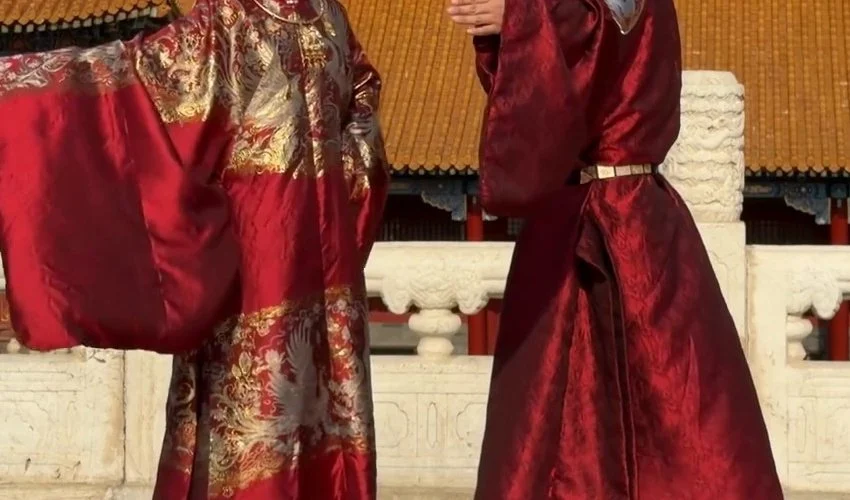
The left sleeve gives the red cloth room to spread across the image. On the right, the belt makes a horizontal break above the long lower section. Following those edges reveals two different outlines before any garment name enters the comparison.
Pose changes how much of that outline we can see. A raised arm opens the sleeve; an arm held close to the body can hide it. For a shape comparison, request both a relaxed front view and one with the sleeves extended.
The belt is visible here, but the construction beneath it is covered. A close view of the waist would help distinguish a gathered surface from a seam or the overlap between separate pieces. Each calls for a different description.
Red-and-gold hanfu: compare the patterned and plain areas
Within that wide outline, the placement of gold-colored motifs changes the balance of the red. The sleeve below has a large plain area, while pale and gold-colored patterns gather around the upper garment and edges. The empty red area is part of the design, too.
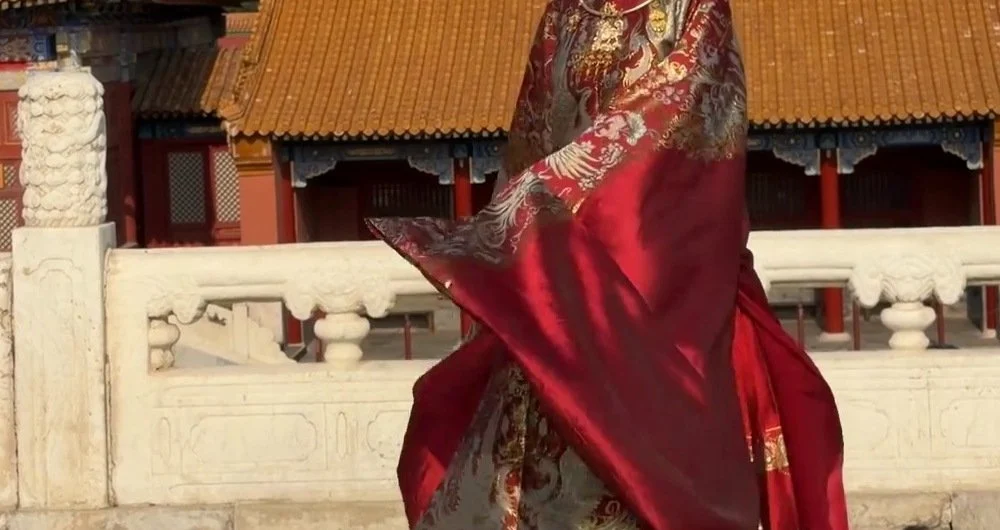
Compare where the pattern stops, not just how much gold appears. A border directs attention along an edge, while a larger motif draws the eye into the body of the garment. Here, the broad red sleeve keeps a clear shape even beside the busy decoration.
For a quieter look, seek more plain cloth between patterned areas. For a more heavily decorated look, compare the size and spread of the motifs across the whole outfit. A close detail and a full view serve different purposes when making that choice.
Gold-colored describes what we can see. Identifying metallic thread, embroidery, or a woven pattern needs closer evidence about the cloth. A photograph of the complete outfit is a starting point for those questions, rather than a material label.
Before ordering red hanfu, match the photo to the pieces
Once a red outfit’s shape and pattern appeal to you, check which pieces create that effect. The belt may define the waist, while an outer layer carries most of the decoration. A price attached to one piece can describe much less than the dressed figure shows.
Use the listing’s written contents to match each item to the photograph. If the pictured belt is absent from the contents, ask about it before paying. The same check applies to a patterned outer garment worn over a plainer inner layer.
| What caught your eye | What to request |
|---|---|
| A broad red sleeve | Front views with the arm relaxed and extended |
| A sharply defined waist | A clear waist view and confirmation that the belt is included |
| Gold motifs across several layers | Separate views of the pieces sold at the selected price |
| A particular shade of red | Additional photos of the same item in ordinary daylight |
Treat shade names as a starting description. Screens, lighting, and folds can make reds look different, including within one outfit. Extra photographs help compare those changes; a fabric sample gives a physical color reference when a close match matters.
Keep the selected size, color, and piece list together when placing the order. The red that drew you in should belong to the garment you expect to receive, with the sleeve, belt, and patterned layers accounted for.