Qipao (旗袍, qípáo) is a Chinese women’s dress also known as cheongsam. Its familiar details include a standing collar, ornamental fastenings, and side slits. To describe a particular qipao, look at its whole shape first, then its parts. A name leaves room for quite different dresses.
Start with the entire dress, compare the details, then choose whether the next question concerns a garment’s history, its construction, or clothes to wear today. The full view and closer look below make that first comparison possible.
Qipao and cheongsam name a dress, not a fixed cut
Qipao and cheongsam can refer to the same dress. Seeing both names in a search doesn’t mean you’ve found two separate styles. For an individual garment, a description of its sleeves, length, and body shape tells more than choosing one of those labels.
The Peranakan Museum’s qipao record identifies a high collar, side slits, and ornamental fastenings near the collar and front opening. It also describes early styles with a loose outline and long hem. The close-fitting dress is part of a wider story of changing shapes.
Treat those features as places to begin looking. A catalog entry can describe one dress precisely, but it won’t describe every dress grouped under the same name. Keeping both levels in view helps when a search mixes historical objects, newly made clothes, and contemporary adaptations.
Qipao occupies one branch of traditional Chinese clothing. The broader guide places it alongside robes, separate garments, and other dress traditions. Within this branch, the useful comparison is between particular dresses and the evidence accompanying them.
A full qipao view reveals more than the waist
A loose outline becomes concrete in the yellow-green dress below. Pale sleeves extend widely to either side of a long patterned body. The standing collar and lower hem remain visible together, so the sleeve width can be compared with the length of the body.
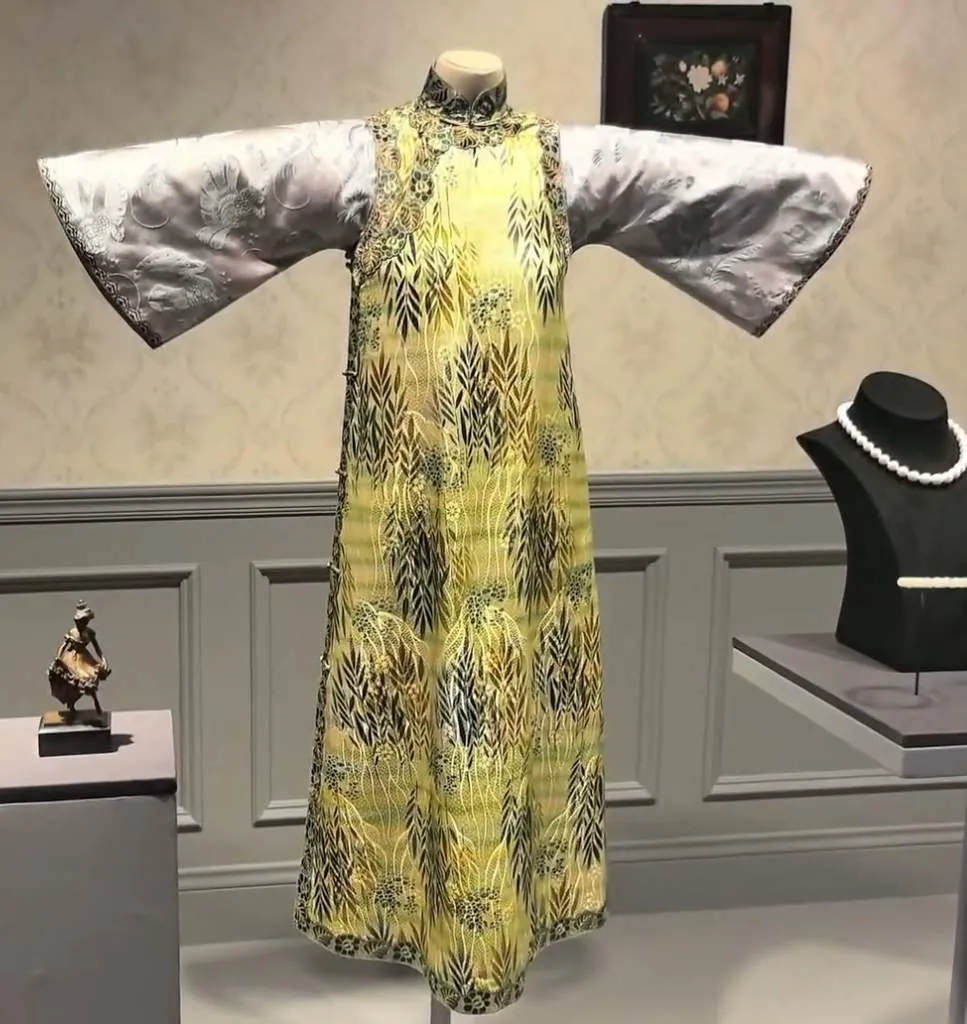
The sleeves occupy much of the upper outline, while the body continues far below them. A crop ending at the waist would emphasize the collar and patterned chest. Keeping the hem in the comparison restores the proportions of the entire garment.
The display form also matters. It holds the dress upright and spreads the sleeves, making their edges easy to follow. The dress isn’t on a moving person, so there’s still a separate question about fit: how would this shape hang and move on someone wearing it?
Begin with equally complete views. Place the collar near the top of each image and retain the lower edge of each dress, because a long sleeve beside a cropped sleeveless dress leaves you comparing two different amounts of information.
Compare a qipao’s collar, sleeves, body, and hem
Once you’ve seen the whole outline, compare the parts in a consistent order. The collar, sleeves, body, and hem give a description that can travel between a museum record, a family photograph, and a newly made dress. Each part adds a different observation.
| Part of the dress | What to describe | What would help next |
|---|---|---|
| Collar | Its height and shape around the neck | A clear view of the neck opening |
| Sleeves | Their length, width, and relationship to the body | A view showing both sleeve ends |
| Body | Whether the outline hangs broadly or follows the waist more closely | A complete front view, with the display or wearer identified |
| Hem | Its position and the visible edges at either side | A lower-body or side view if the front leaves them hidden |
On the yellow-green example, this produces a plain description: a standing collar above broad pale sleeves, a long patterned body, and a hem visible below. The different surfaces help locate the parts. Pattern doesn’t identify the fiber. For that, you’ll need a label or material record.
In the closer view below, the standing collar sits between the pale sleeves and the patterned upper body. Keep the full view beside it: the close view sharpens the upper details while the full one retains the hem.
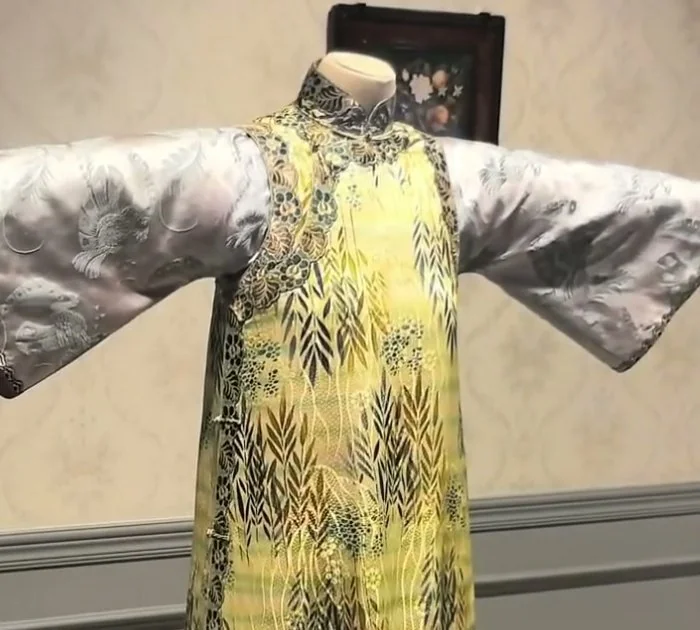
A useful note preserves gaps as well as details. If a sleeve end is outside a photograph, record it as outside the view. If a side slit is hidden, seek another angle. Describing the visible area precisely is more useful than filling the missing area with the shape expected from the name.
Confusion with hanfu calls for a wider comparison. Our explanation of hanfu and qipao distinguishes a broad dress tradition containing different garments and combinations from the qipao dress. A shared collar detail is a starting clue; the complete outfit supplies the context.
Qipao patterns and historical objects answer different questions
The parts visible on a finished qipao lead naturally to questions about making it. A paper pattern offers a different kind of evidence from the displayed dress. Following an outline on paper tells us how a cut is planned; understanding the finished garment also requires knowing how its parts join.
A pattern needs a connection to the garment it explains. A paper shape from a separate making project can’t establish the displayed dress’s construction. If you’re studying that particular dress, seek its own cutting and assembly records before treating another pattern as an explanation of it.
To study construction, seek the complete pattern and how its parts join. For a historical garment, begin with its catalog record, including its recorded date and context. A new garment made from an older reference adds a further question: which reference was followed?
The word traditional can introduce that conversation, but a named form, object, or method makes it more precise. Ask what the description refers to before using it to judge the garment. Making a dress today and documenting the age of a surviving object are separate tasks, even when their outlines look similar.
Choose a qipao question before searching further
Different records become easier to find when the question is specific. Keep the dress or image you’re researching beside a short note about what remains unresolved. Naming the missing detail helps move beyond another page of attractive dresses.
For names, begin with the term used by the maker, wearer, or collection. A question about qipao and cheongsam can then distinguish ordinary use of the two names from a question about a particular regional or historical description. A broad label is the beginning of that search.
For history, look for a dated garment record or image connected to the form being discussed. For making, seek a complete pattern and construction account. For clothing to wear, ask about the specific garment’s measurements and intended use. Match the question to the record.
If the search has led instead to a top, skirt, or layered robe outfit, the hanfu guide follows those garments as parts of an ensemble. Return to the item that started the question: give its visible parts a description, then ask for the one record that would resolve the remaining uncertainty.