Hanfu (汉服, hànfú) means the clothing of the Han Chinese. The name covers historical dress traditions and the clothes made today to draw on them. It includes robes and separate garments, rather than one fixed dress or only clothing from the Han dynasty.
The name spans quite different outfits. Complete garments and a look inside a plaid top help explain the clothing, followed by its historical references, the distinction from qipao, and ways to approach hanfu today.
What does hanfu mean?
The Han in hanfu refers to the Han Chinese ethnic group; fu means clothing. A dynasty name dates a period, while an ethnic name identifies a people. That distinction keeps the word from being reduced to the wardrobe of the Han dynasty.
Later periods belong in the discussion. Universiti Malaya’s hanfu exhibition includes Tang and Ming clothing. A dynasty label adds a period reference, while the garment still needs its own description.
Hanfu sits within the wider subject of Chinese clothing. China’s other ethnic communities have their own dress traditions. Keeping those names distinct preserves the connection between clothes and the people who wore them.
For someone asking about “a hanfu,” the answer becomes clearer when it names a top and skirt or a long robe. Hanfu provides the broader cultural connection between those different clothes.
Hanfu includes separates as well as robes
The range within hanfu becomes easier to see when a top-and-skirt outfit is compared with a robe. The first combines separate clothes; the second has a long garment as its main piece. Both can create a flowing outline when worn.
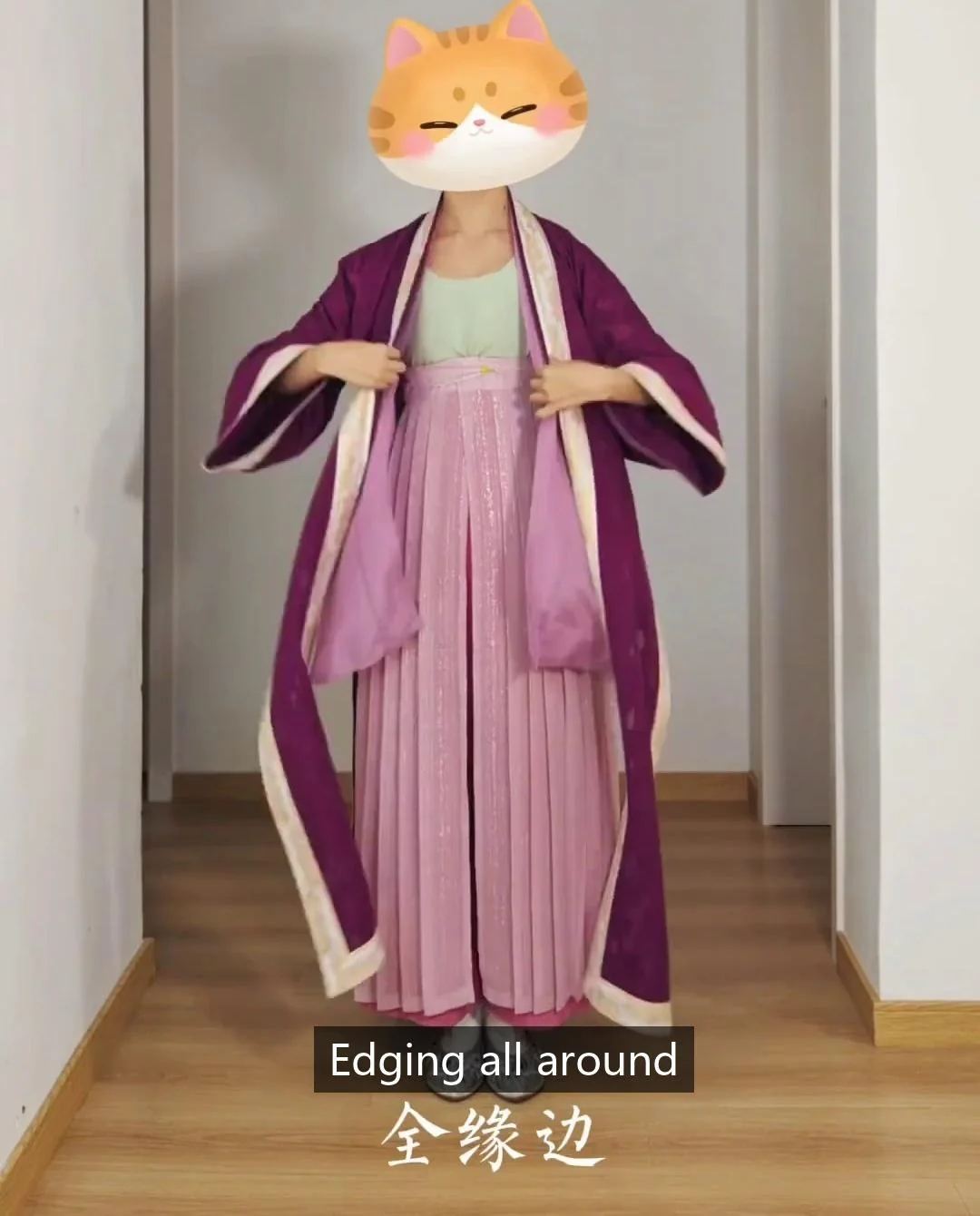
A top’s hem and a skirt’s upper edge show where separate garments meet. A robe may cover that area with continuous cloth. A belt can conceal the difference.
Collars vary, too. A cross collar runs diagonally across the chest, while a round collar curves around the neck. The China National Silk Museum’s historical account describes both round-collar robes and short tops with long skirts in its discussion of Tang clothing.
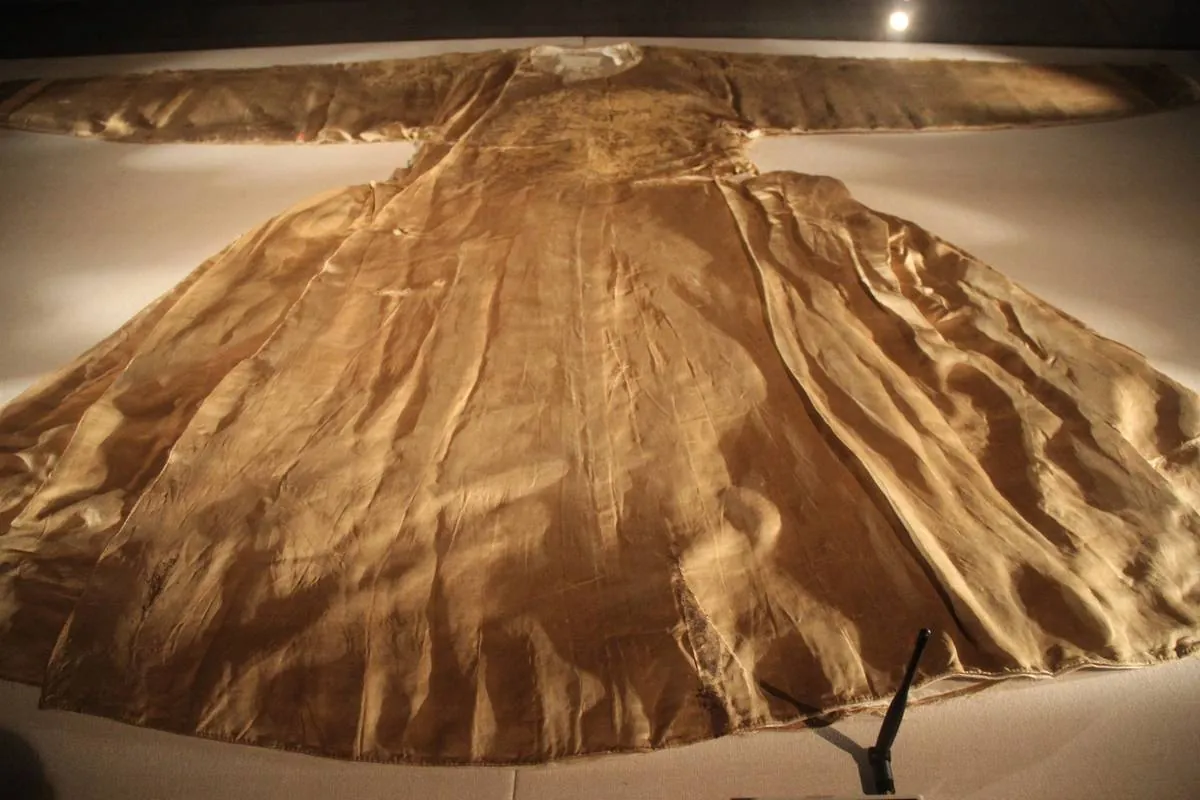
Wide sleeves and bright sashes draw attention, but each belongs to a particular outfit. Finding which garment carries a detail is more informative than treating every decorative feature as a defining rule.
Inside a cross-collar hanfu top
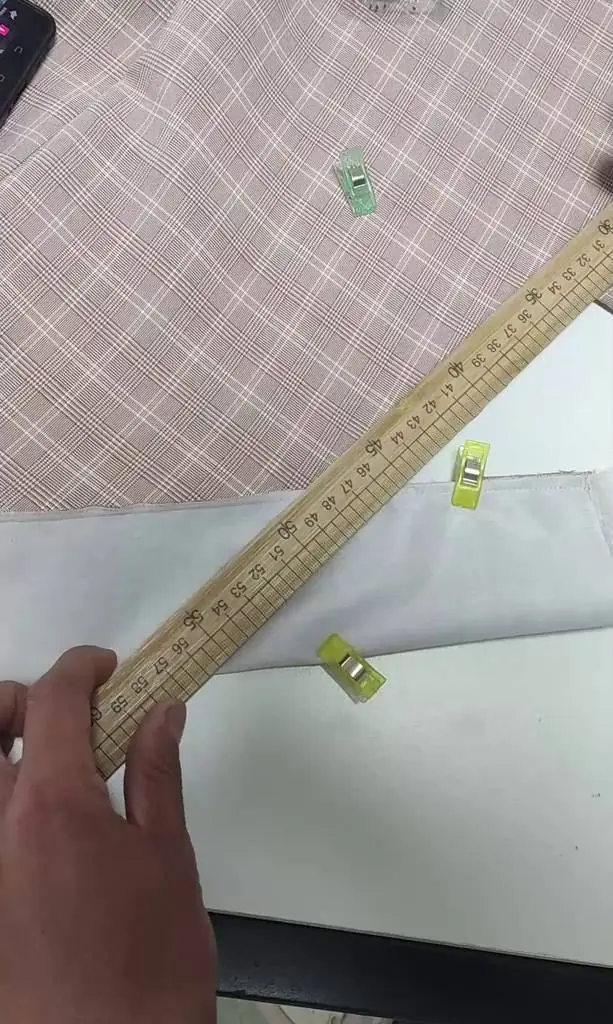
A single top makes the construction easier to examine. In this modern plaid example, a pale band meets the checked body cloth along a long edge. Clips hold the layers together.
Opening the finished top reveals a white inner surface beneath the plaid. The plaid bands continue along the opening, while narrow ties extend from the cloth. The inside view separates the lining from the outer face in a way a dressed front view can’t.
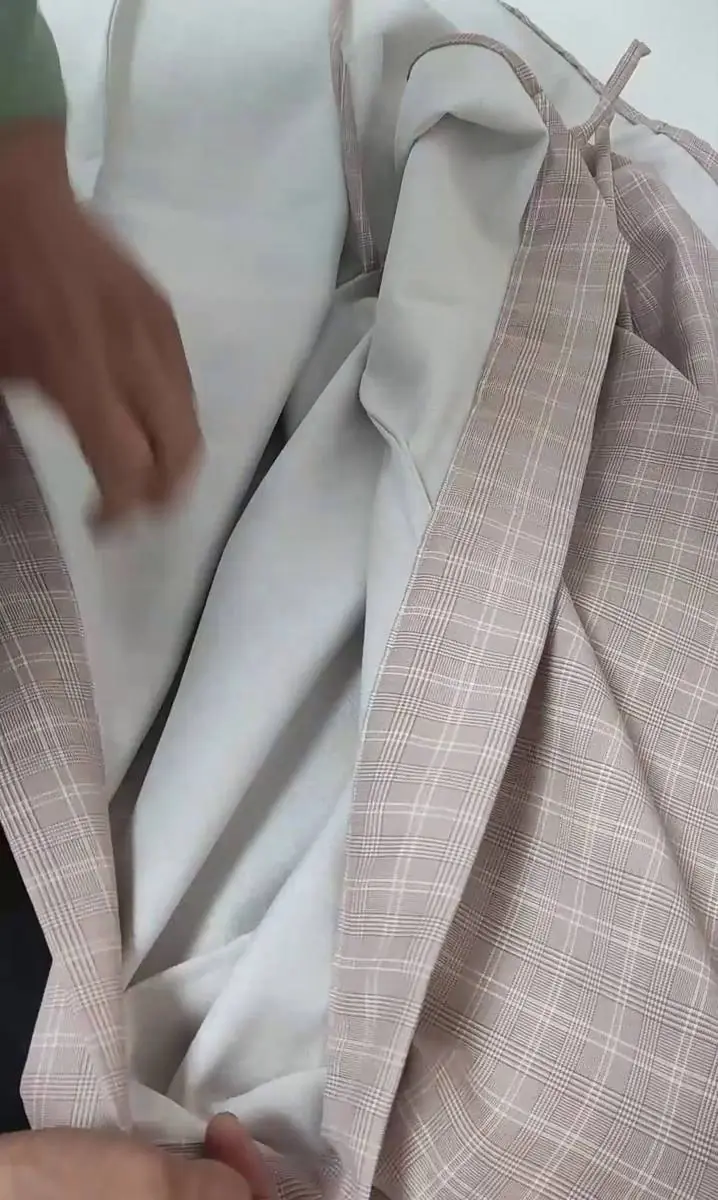
Lining and an undergarment are different things. The lining forms the inner face of this garment. A separately worn inner shirt would have its own body and openings, even if only a small white edge showed above the outer collar.
The narrow ties attach to the top itself. A separate sash would be another item. Here, the plaid cloth, lining, bands, and ties let us examine the choices within one modern garment.
Historical hanfu and the clothes made today
The modern top raises a larger question: what makes clothing traditional when the garment itself is new? Today, the name hanfu can connect newly made clothes with older dress forms. The relationship may be close or loosely interpreted, depending on what the maker set out to do.
The China National Silk Museum separates newly tailored hanfu from excavated garments in its Ming costume project. Both appear in the account, with different roles in studying and wearing historical forms.
An excavated garment preserves the earlier cloth and construction, while a replica brings findings from that object into new material. Compare the cut and details to see which choices the reconstruction follows.
The project included a costume festival alongside conservation and research. Wearing new clothes and studying old ones could happen together. Traditional describes a connection across time; the new garment has its own making date.
Hanfu and qipao belong to different dress histories
Qipao (旗袍), also called cheongsam, names a woman’s dress with its own place in Chinese dress history, while hanfu encompasses a wider range of garments and combinations.
The Peranakan Museum’s qipao record points to a high collar, ornamental fastenings near the opening, and side slits at the hem. It also describes an early, loose-fitting example. The close-fitting outline familiar from later qipao is only part of that dress’s history.
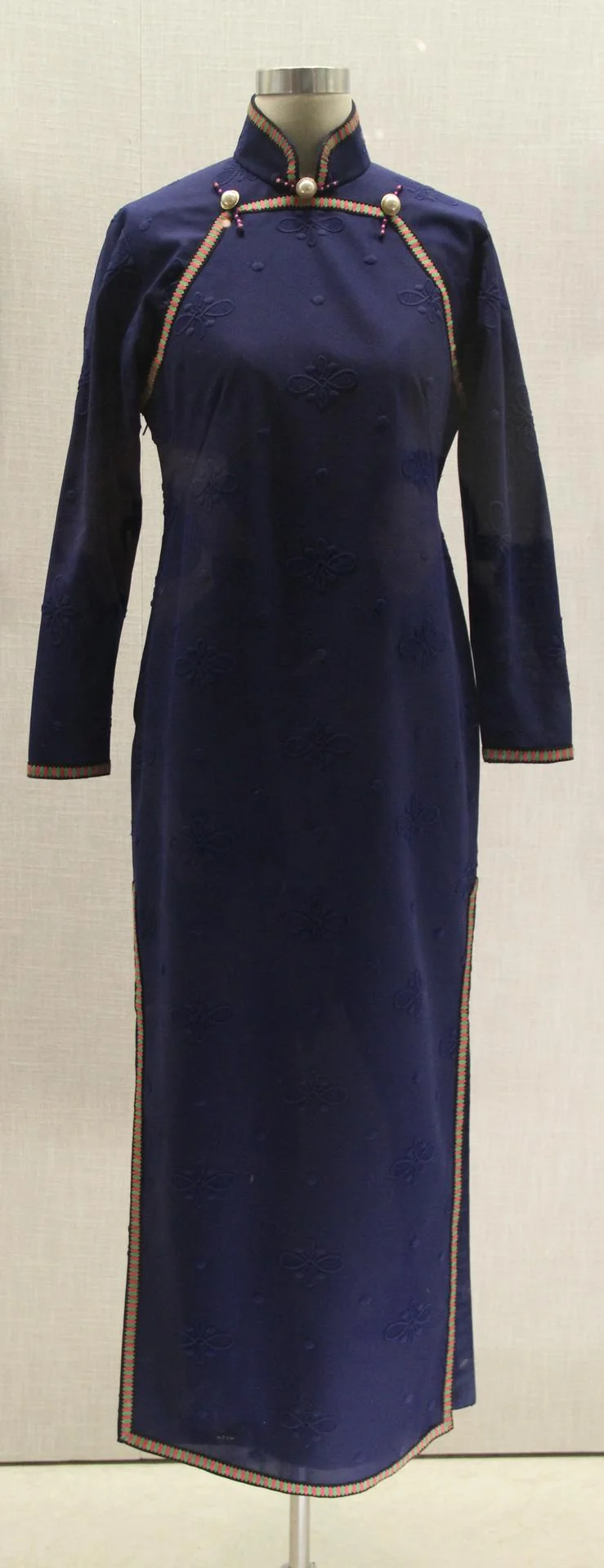
A collar alone leaves the garment’s identity unresolved. The opening, body, sleeves, and hem need to be read together. For an older qipao, its recorded date gives the shape a historical setting.
Chinese clothing includes both names. For a closer description, keep qipao distinct and identify the particular hanfu pieces. The English word dress can otherwise blur a single garment with a top-and-skirt combination.
Wearing hanfu today: interest, occasion, and layers
An interest in hanfu can begin with clothing, history, or cultural identity, finding expression at a shared festival or through the quieter choice to wear an outfit in daily life.
Organized try-ons can make the first encounter less puzzling. The South Coast Chinese Cultural Center’s June 2024 event paired historical introductions with staff-guided dressing and photographs. The clothes became things participants could wear and examine, alongside the explanation of their background.
Non-Chinese beginners can start by asking a cultural event’s hosts about participation and dressing help. Learn the garment’s name, too: that gives the exchange a specific subject beyond admiring the outfit.
What goes underneath depends on the clothes. A sewn-in lining and a separate inner garment do different jobs. For an open front or sheer fabric, ask which inner piece supplies the intended coverage.
Choose the setting before adding elaborate accessories. A community try-on may offer dressing help; a wedding has its hosts’ expectations. Begin with that invitation and the clothes it calls for.