Traditional Chinese textiles are cloth and textile objects made across different communities, periods, and uses in China. Silk is a major part of that history, but it isn’t the whole field: UNESCO’s account of Li textile work in Hainan names cotton and hemp as well as spinning, dyeing, weaving, and embroidery.
A useful first reading separates what the threads are made of, how they become cloth, and what happens to the cloth afterward.
Those questions work for a robe, a hanging, or a fabric fragment. We’ll use museum descriptions to sort materials from techniques, then follow each kind of question to a more focused subject.
Traditional Chinese textiles include more than silk
A textile begins with material, but its name may describe something else. “Silk” identifies a fiber; “embroidered” names work on a surface; “robe” names the finished object. All three can describe one piece of cloth. None alone tells you how the others were made.
The range is wider than the silk pieces most often reproduced in books and museum shows. UNESCO describes Li women in Hainan using cotton, hemp, and other fibers for clothing and daily necessities. Saint Louis Art Museum focuses on silk objects in one show; its material scope is narrower.
Look at the cloth in a photograph, but don’t use its gloss to declare that it is silk; a finish or weave can also catch the light. A documented material label gives a named fiber claim. For an uncertain historic object, fiber analysis can test that claim.
A cloth can also combine materials, so the label may name more than one part. A finished outfit raises a narrower question: the silk hanfu guide examines fiber content across separate garments and layers.
Weaving makes cloth; needlework can add to its surface
Material tells us what the thread is; the weave tells us how the cloth holds together. Saint Louis Art Museum lists plain, compound, gauze, and satin among the weaves used for Chinese silks.
The museum also lists tapestry, brocading, embroidery, and couching among ways patterns were created. A patterned surface prompts two questions: what made the cloth, and how was the design formed?
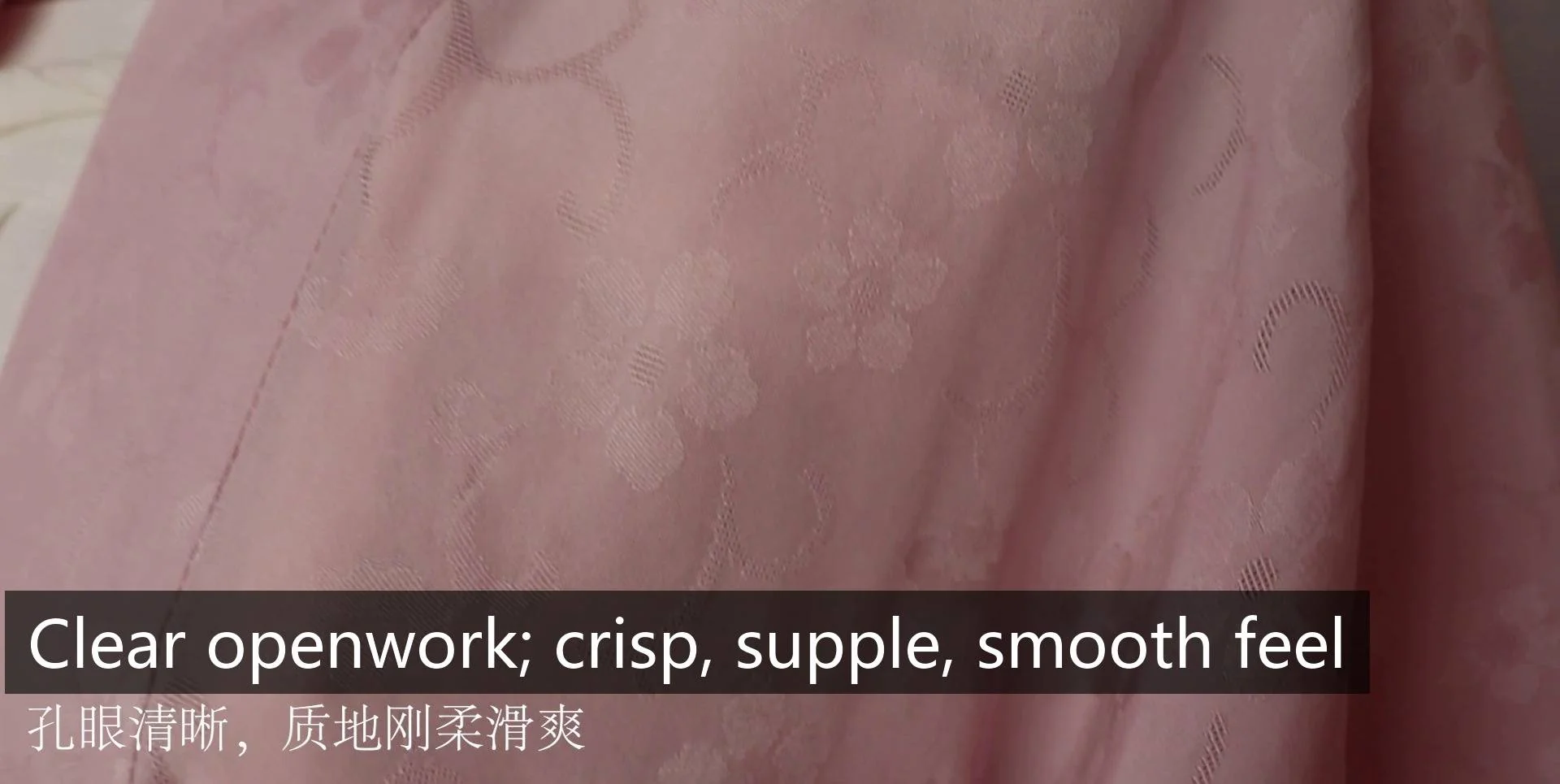
Embroidery puts stitches onto a ground that already exists. A woven pattern is formed as the cloth is made. The Met describes a Chinese kesi image built by weaving in colored silk threads. The V&A describes embroidery threads worked on a fabric ground. Both explain when the thread enters the design.
In a clear close view, see whether threads rise as stitches above that ground. A photo may leave the answer open; the object’s record can name the method.
That distinction matters most when a photo looks deceptively simple. A bird or flower can appear in woven cloth or in stitches worked over it. Look for the object record’s technique line before assigning a process from the motif alone.
The separate guide to Chinese embroidery can take up regional names and individual stitches when that is the reader’s question; those details do not have to carry this whole textile overview.
Read a Chinese textile label in layers
An object label often answers several questions in a few words. Saint Louis Art Museum identifies one court robe as silk in kesi (缂丝), a tapestry weave with metallic threads, and notes another silk fabric called faille in its sleeve extensions.
“Robe” names the finished object, “silk” the material, and the weave names how part of the cloth was constructed. The sleeve extensions show why one material line does not always describe every part alike.
Try reading a record in this order: object, material, weave, surface work, then date and recorded use. This is a reading aid; it doesn’t claim that every textile was made through those steps.
Some records answer only a few of those questions. A panel caption may give a technique and date but little about a wearer, because it wasn’t clothing in the first place.
The Metropolitan Museum of Art labels a panel with phoenixes and birds as silk and metallic-thread kesi tapestry. Its exhibition also includes embroideries and court costumes. The label lets us compare these objects without assuming a shared bird motif came from the same method or use.
| Look for | It answers | It leaves open |
|---|---|---|
| Fiber or material | What the named threads or cloth are made from | How the design was formed |
| Weave or construction | How the cloth or woven image was built | Whether later stitching was added |
| Embroidery or other surface work | What was worked on or with the cloth | The object’s original use |
| Object type and context | Whether this is a robe, panel, hanging, or another item | Whether an unlabeled photograph shows the same material or method |
Textile objects extend beyond clothing
The robe is only one possible destination for cloth. Saint Louis Art Museum lists accessories, furnishing fabrics, hangings, banners, and decorative pieces alongside clothing. The Met’s show includes a canopy and a panel with theatrical garments and court costumes. These textiles were not all worn.
A sewing machine following a marked edge shows a step in assembling clothing from cloth; a hanging shows how an image was displayed.
A cut fragment may preserve a weave while leaving its original use uncertain. Calling all three “traditional Chinese clothing” would lose the difference between cloth as material and clothing as one finished use.
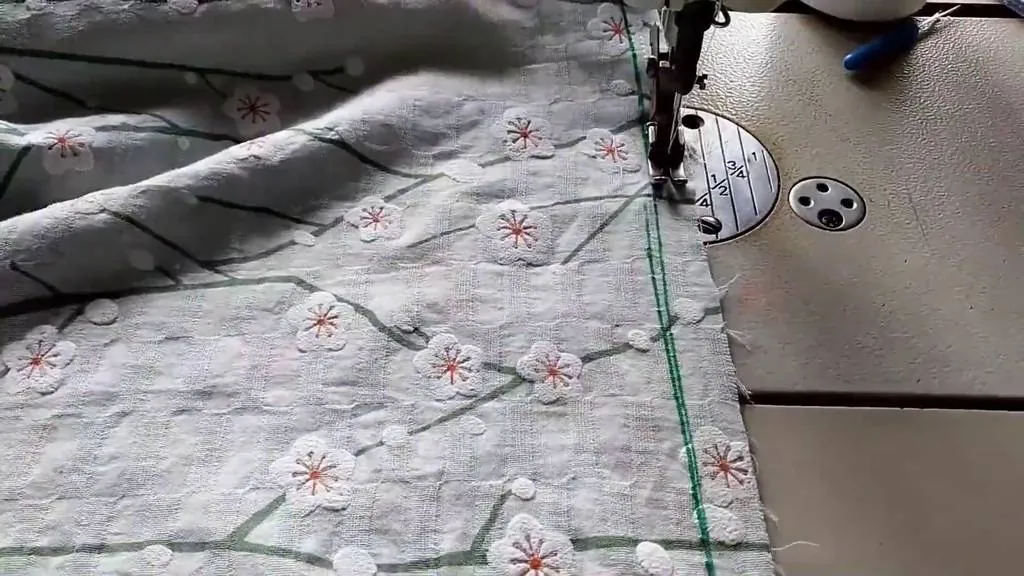
For garments, the traditional Chinese clothing guide follows names, layers, fastenings, and the evidence behind historical or modern dress. This page stays with the textile questions that can apply before any garment name is known.
Choose a deeper textile question
Once the label has been separated into its parts, pick the part you actually need. For a finished silk outfit, the linked hanfu guide examines layers and material labels; for stitches on a ground, Chinese embroidery needs its own account of stitch shapes and regional traditions.
Brocade and silk also deserve their own treatment as textile subjects rather than a few decorative names in a list. They belong in the textile path as distinct topics, with their own pages and evidence when those pages are ready.
Keep the original object record beside any image as you compare these subjects. Material, method, and use can meet in a single piece, but each term answers a different question. Reading them separately is the quickest way to find the next source or guide that will actually help.