Hanfu and stage costumes describe different things: hanfu (汉服) refers to Han Chinese dress and clothes drawing on that tradition; a stage costume serves a performance. A garment can do both. For historical accuracy, ask what the clothing reproduces; for a performance, ask what the role needs.
The phrase hanfu costumes can blur those questions. A shop may put old dress forms, fantasy styling, and stage wear together. An opera wardrobe, a machine-stitched panel, and a small clasp help show what each kind of evidence can tell us.
Is hanfu the same as a stage costume?
Hanfu isn’t another name for stage clothing. One label links clothes to a dress tradition; the other tells us how they’re used. A shop’s costume label still leaves open which older clothes, if any, served as the model.
Modern hanfu also covers a range of relationships to older clothes. The China National Silk Museum’s Ming project describes modern hanfu as covering both close copies and freely imagined designs. The label leaves room for quite different design choices.
Separate the questions before comparing two outfits. The table below is a way to read a description, rather than a ranking of which clothes deserve to be worn.
| Description | What it tells you | What still needs checking |
|---|---|---|
| Historical reproduction | The maker claims a relationship to an older garment or image | Which source, and which parts follow it |
| Contemporary hanfu | The garment draws on Han Chinese dress traditions | Its particular form and any changes to cut or styling |
| Stage or screen costume | The outfit serves a performance or character | The production’s design aim and any historical references |
| Fantasy-inspired outfit | Imagination is part of the design brief | Which pictured pieces are included and how they fit |
A stage show can use a faithful copy, while clothes worn outside a theater can take broad liberties with history. Purpose and accuracy are separate questions. Judging those two things gives a clearer answer than calling a flowing robe real or fake from one small photo.
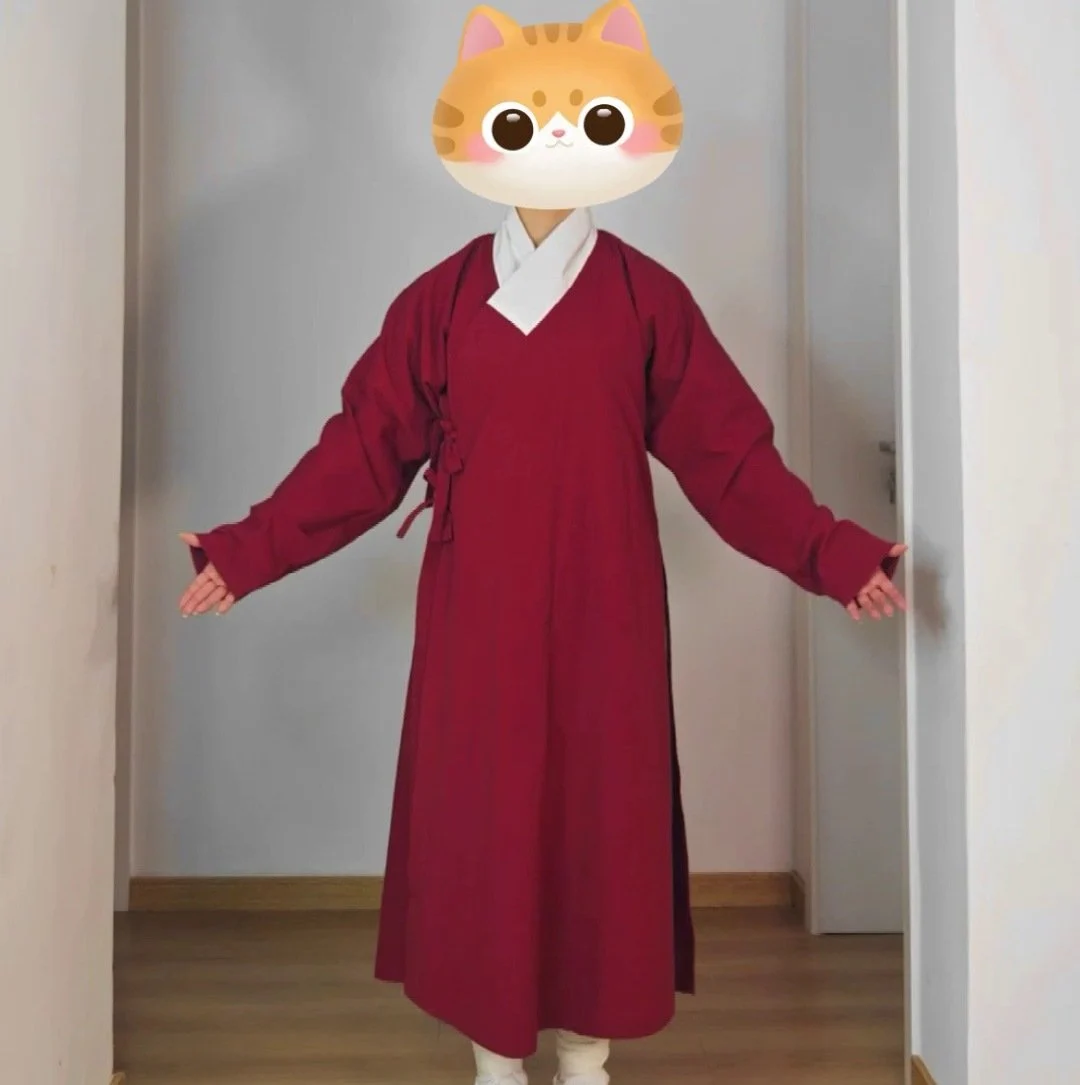
In this modern hanfu example, the white collar crosses above a long red robe, and ties sit to one side. The wearer holds both arms out, letting the sleeves and body be seen together.
Chinese opera costumes are made for roles
Chinese opera offers a concrete example of clothing shaped by a performance. In the Met’s exhibition From the Imperial Theater, robes belonged to specific roles, including officials, generals, and immortals. Those roles matter because they’re part of what the clothes were made to express.
Peking opera’s sparse stage settings and bold gestures gave clothing a large share of the visual work. A robe helped establish the role the audience was watching. The Met links the clothes to that stage setting, so the recorded role is part of reading the robe.
An old stage robe is evidence of theater dress in its own right. Its age doesn’t tell us that everyone dressed that way offstage. Check the object record: does it name court dress, daily wear, or a role in a play?
Modern dance, screen drama, and fantasy photos need their own context too. If the aim is to dress as a character, begin with that character’s design. Ask for a period source as well when the listing makes a claim about history.
Machine embroidery cannot settle a hanfu label
The role of a costume explains its use; the stitches tell us about its making. In the red panel below, a row of machine heads sits above silver-colored stitches. We can see how the cloth is worked, but the whole garment’s shape remains outside the picture.
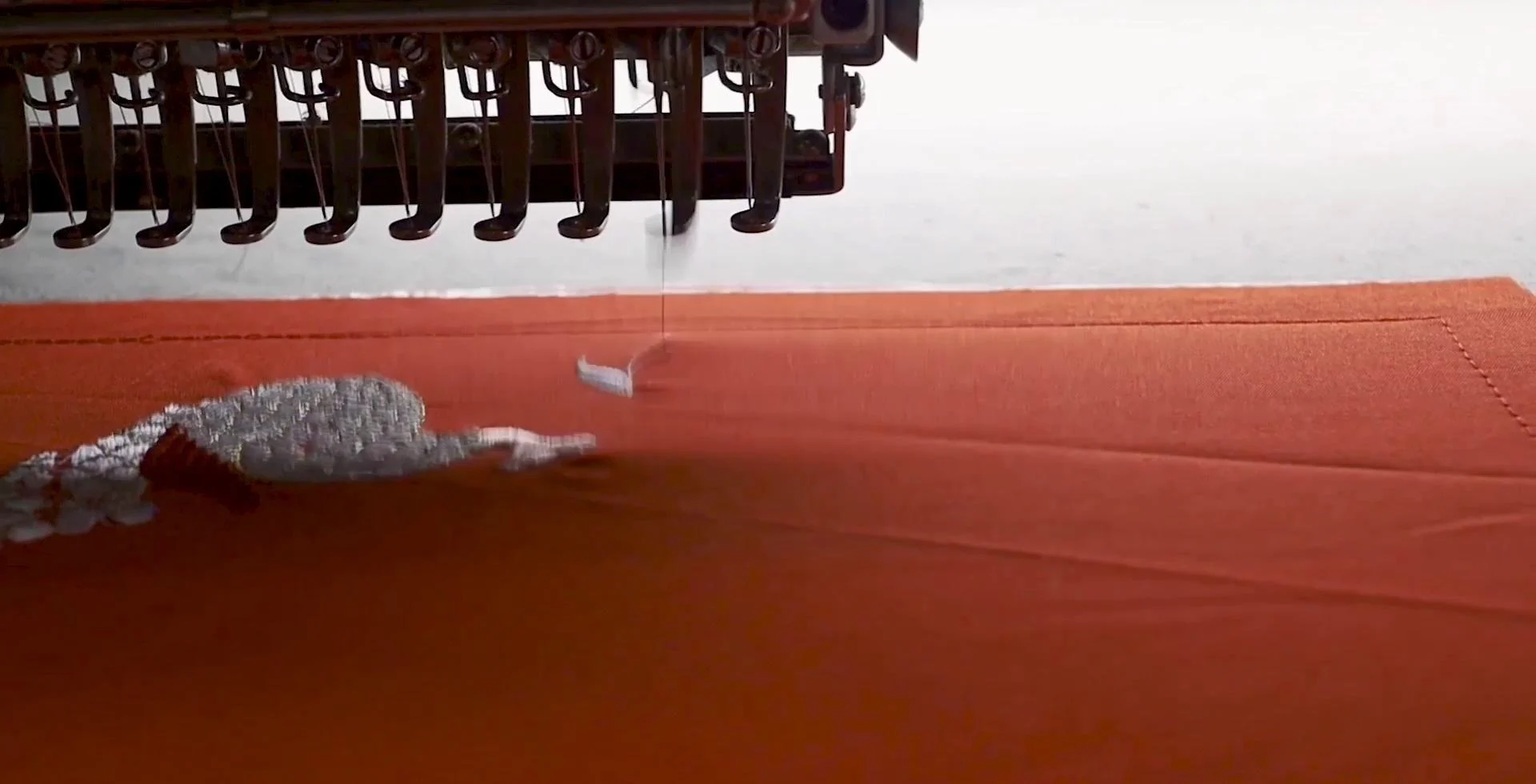
A maker can use machines for an older cut, or sew a newly imagined design by hand. To assess a claim about copying old clothes, compare the source with the finished garment. The machine tells us how part of it was made.
The clasp detail makes the distinction smaller and easier to see. Fingers hold a gold-colored fastening against a white edge beside pale purple fabric, with a fine thread visible. Look at where the fitting meets the edge. That junction tells us about attachment, even before the complete opening is visible.
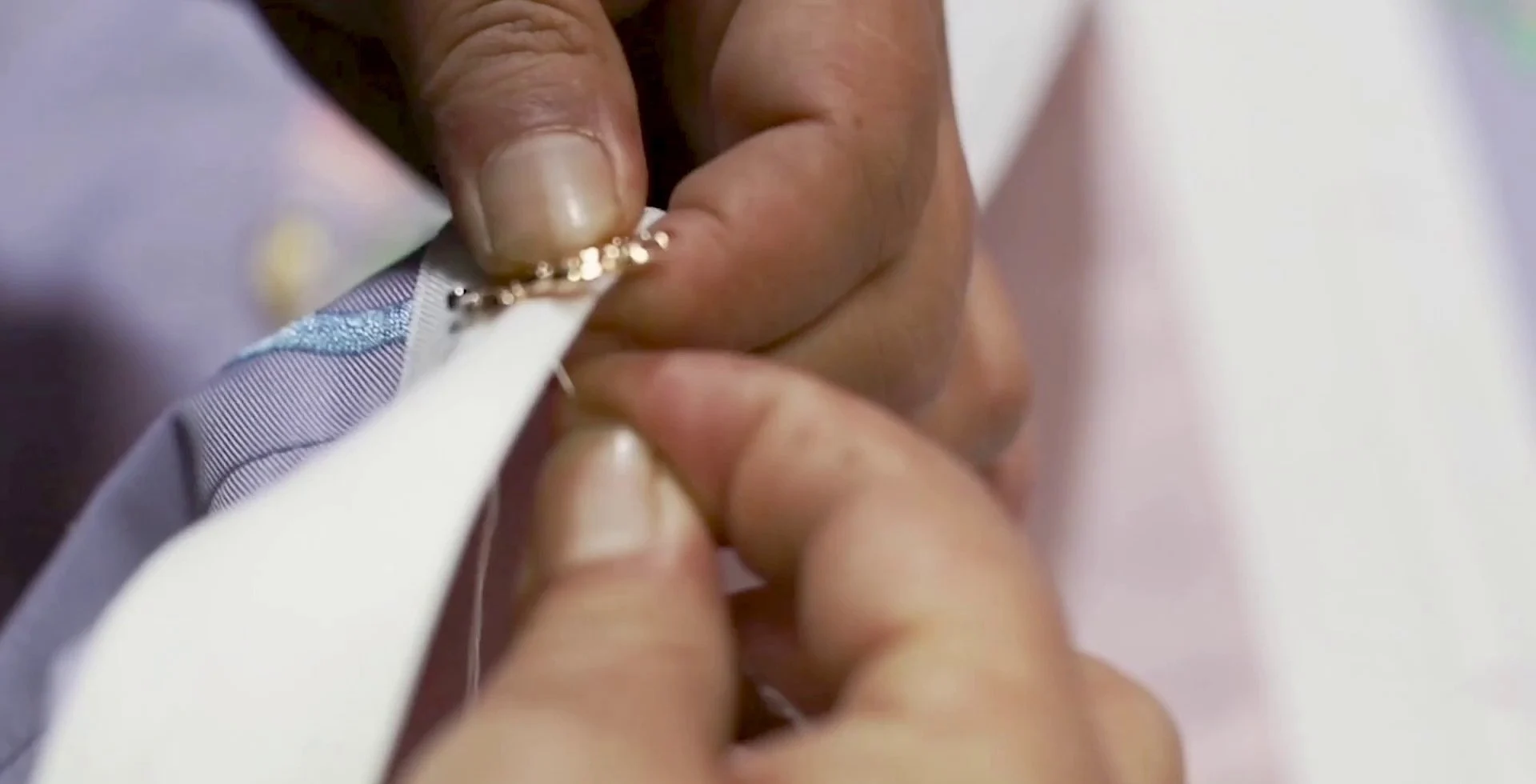
Check the pattern and the opening as separate details. For this panel, a wider view would show how the edges meet and where the clasp sits on the body. The pattern can catch the eye while the cut stays hidden.
The two detail photographs document modern making. They provide close views of stitches and a fitting, not a visual certification of a dynasty. For an outfit sold as a reproduction, the next piece of evidence is its named historical model.
Ask what the hanfu outfit is meant to reproduce
Ask the seller what the outfit was designed to do. A copy of an old robe, new clothes for daily wear, and a character’s costume call for different answers. Follow that answer with a request for evidence you can compare with the clothes.
For a historical claim, request the source image or object record and a note on changes. A maker may follow the outline while changing the fabric or fastening. Knowing which choices were made lets you assess the result against your own aim without treating every change as the same problem.
For stage use, take the full list of pieces to the person in charge of costumes. Check the sleeves, hem, layers, and ties against the role’s movements. A still photo gives a pose; a rehearsal tests how that outfit moves through the action.
For a photo session or casual wear, ask what comes with the advertised set. The outer garment, inner layers, belt, and hair ornaments may be shown together, so match the written contents to the picture. Request a clear front view and a view of the opening before deciding from decoration alone.
If the answer is simply “authentic hanfu,” ask one more question: authentic to which garment, image, or role? A named source gives the seller a claim to explain and gives the buyer something to check.