A hanfu robe is a long garment within Han Chinese dress, but English shop listings also use robe for open outer layers. The name alone leaves the cut unclear. Look at the collar, the front opening, and the body down to the hem to work out which piece is offered.
Front, rear, and pattern views help separate those questions. The guide follows robe names through collar shapes and paper pieces, then turns to the measurements for a wearable garment.
What does a hanfu robe include?
A robe can be the main long garment in an outfit, or a listing can use the word for a loose outer piece. An open outer layer leaves clothes beneath it visible. A robe whose fronts close across the torso has a different job, even when both have long sleeves.
Some listings describe a round-neck robe and offer the coat or belt separately. Others call a sheer outer layer a robe. Check the item options: the pictured clothes may be separate purchases.
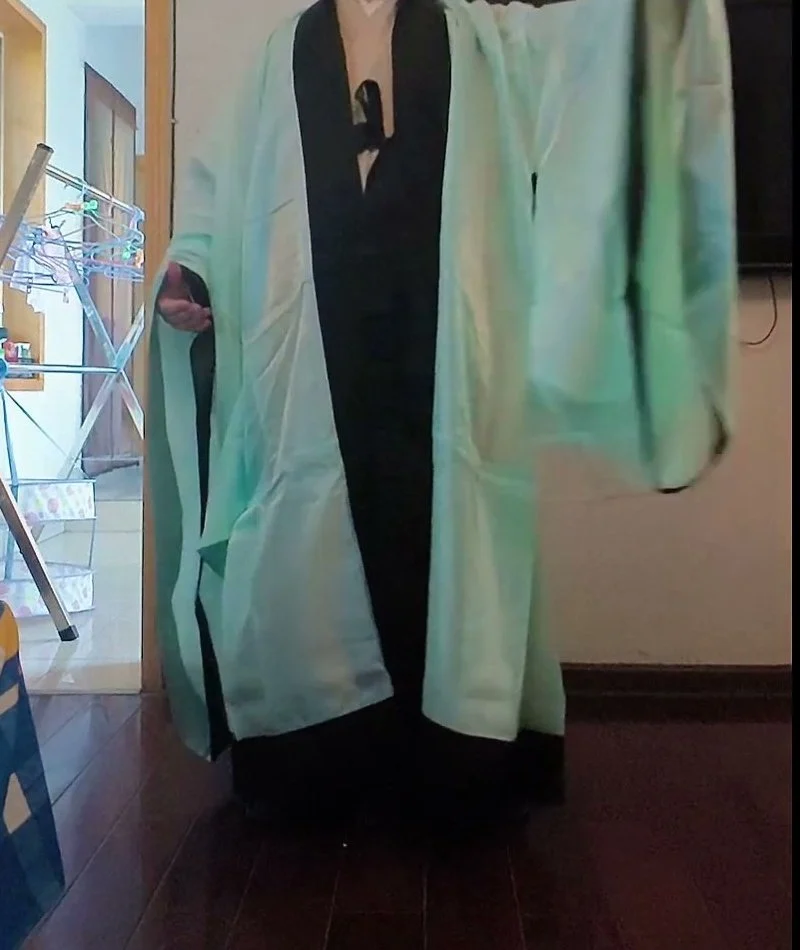
A full-length front view helps locate the robe’s outer edges. An inside view can show whether a panel belongs to that garment or to a separate layer beneath it.
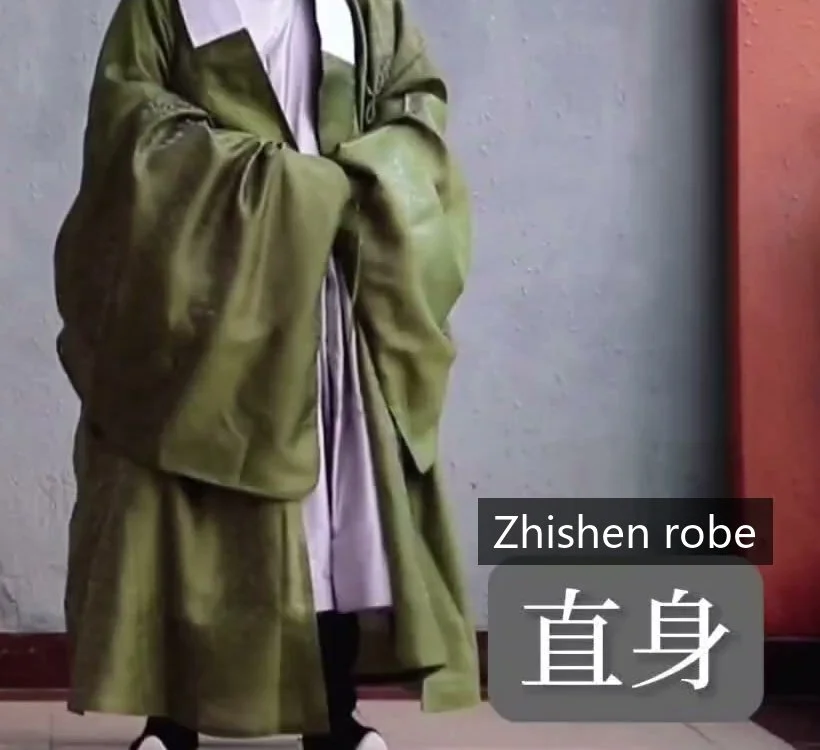
| What the picture shows | What to establish from the description |
|---|---|
| A long garment closed across the torso | Where its opening runs and how the fronts fasten |
| Two open edges with another garment visible between them | Whether the item is an outer layer and what accompanies it |
| A belt across several layers | Whether the belt comes with the robe or is a separate option |
| A short top above a separate skirt | Which piece the seller is calling a robe, if any |
Hanfu includes robes and separate garments, so the word hanfu doesn’t resolve the piece count. A clear listing should let the buyer point to the robe itself, name the accompanying pieces, and match those pieces to the order. For the definition behind that range, see what hanfu means.
Hanfu robe collars and the front opening
The collar gives a closer view of the robe’s cut. A cross collar runs diagonally across the chest; a round collar curves around the neck. Follow the fabric farther to find the opening.
Yuanlingpao (圆领袍) names a round-collar robe. Its opening and fastening need their own view, since a closed front and a front folded open can give different impressions of the same garment.
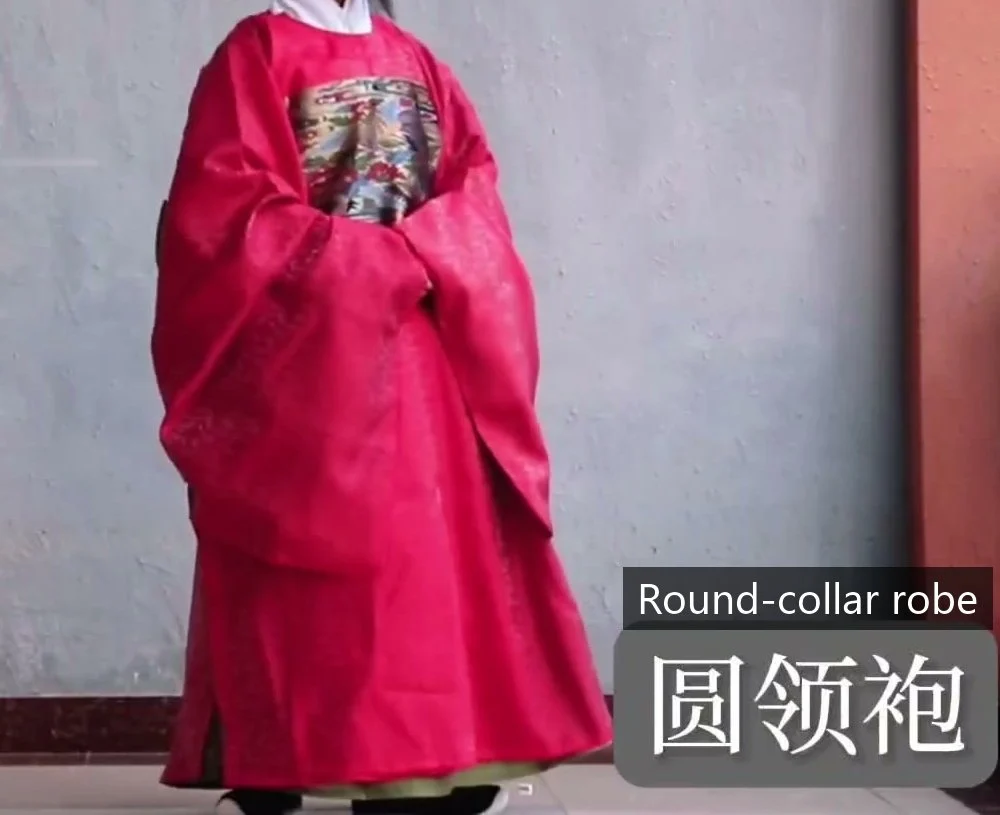
The lower front needs checking, too. A straight-front form is called zhiju (直裾); quju (曲裾) has an extended wrapping front. Follow that extension around the side, beyond the overlap visible at the neckline.
These names describe different features. Yuanlingpao draws attention to the collar, while zhiju and quju distinguish the front’s form. Treating them as a single list of mutually exclusive collar styles would mix two ways of describing clothes.
Construction at the waist adds another question. In a shenyi (深衣), upper and lower sections join into one garment. The Jiangxi Institute of Fashion Technology’s museum cautions against equating every zhiju with zhiju shenyi. A straight front by itself leaves that waist construction to be checked.
A reproduction needs a named object or image behind its cut. For a newly designed robe, ask how the front closes and where the seams run. The maker can describe those choices directly.
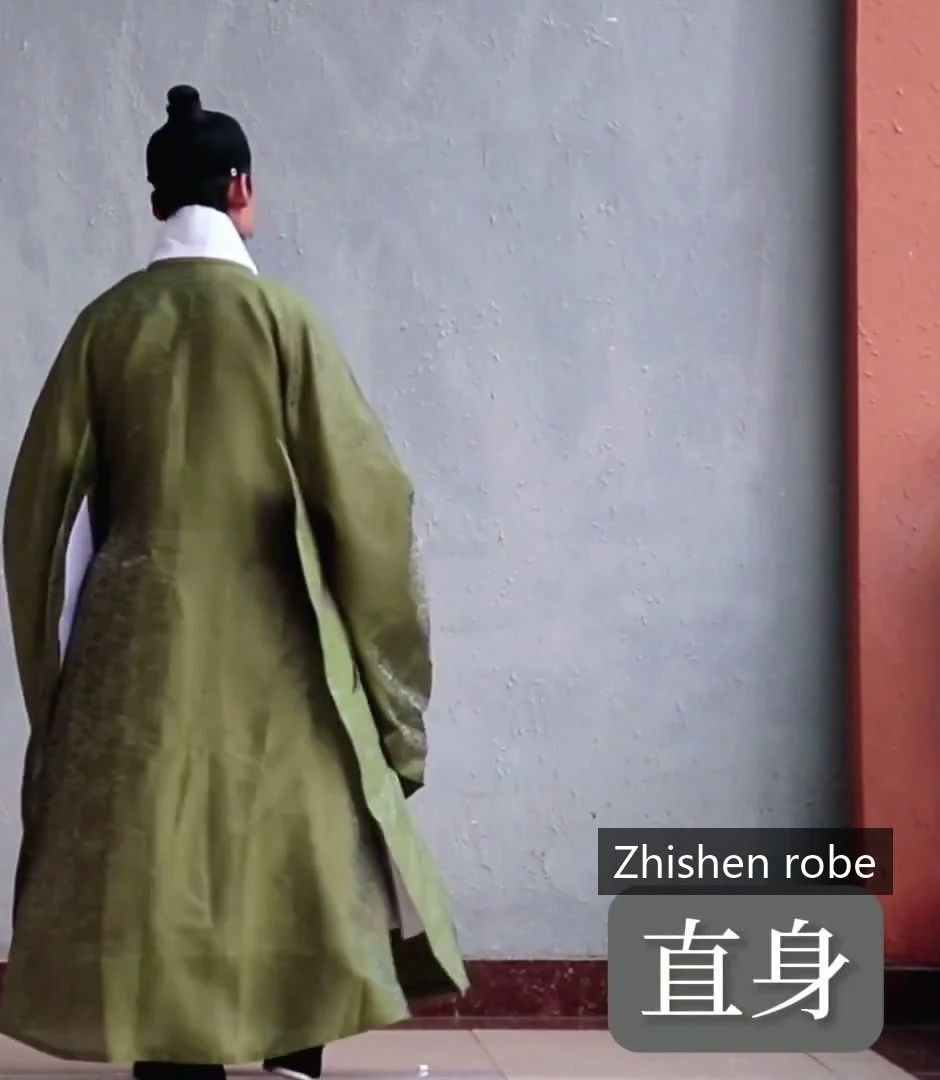
A robe mock-up beside its paper pattern
A flat model exposes a robe’s outline and openings. In the green example below, the sleeves spread to either side and lighter green strips follow the front edges, while the white paper pieces beside it show a separate stage of planning the shape.
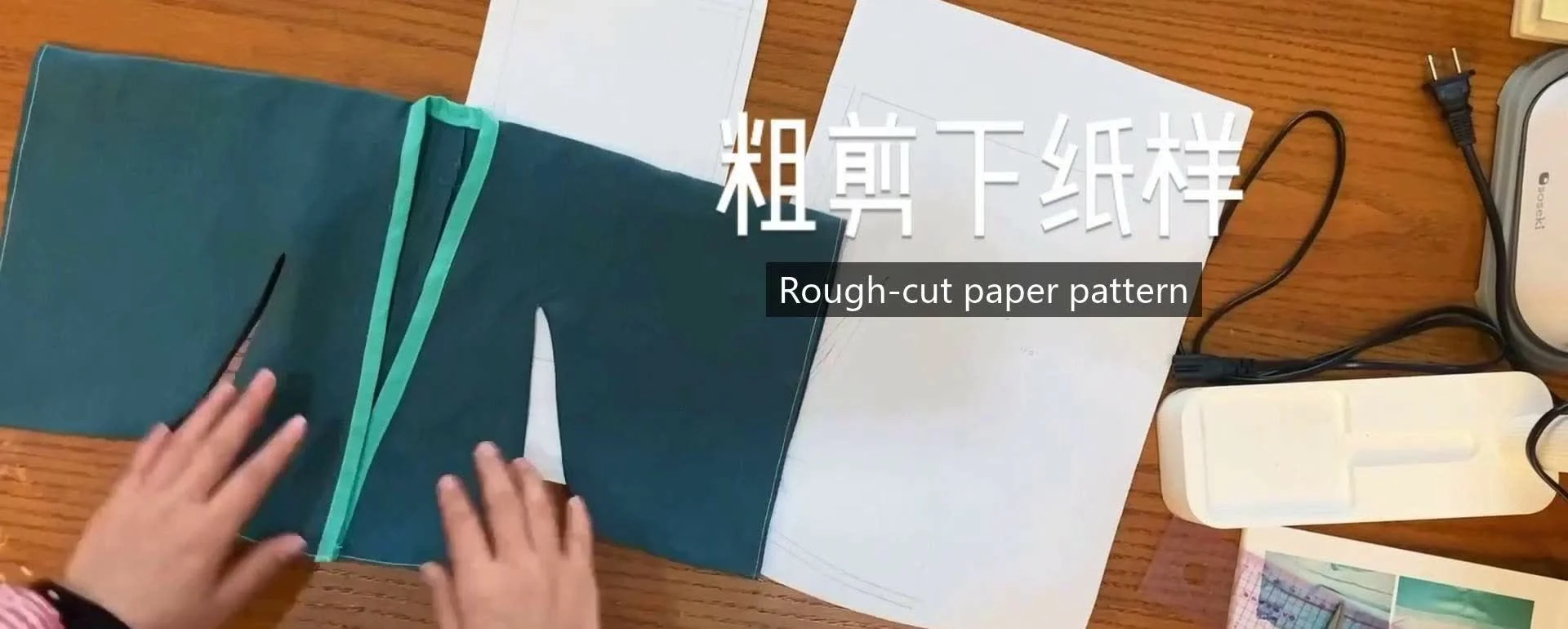
The model lies open, making its front edges easy to follow. A closed view would show the amount of overlap in wear. The bright border marks an edge rather than a measuring line.
The paper pieces show the drawn shapes. Pencil lines run inside the cut edges, and some pieces overlap on the table. Follow those marks separately from the paper’s outer boundary.
Sewing from a pattern requires scale, piece labels, matching edges, and defined lines. These marks don’t supply a complete pattern or an adult size. The model is a modern construction study.
The comparison connects shape with construction. The model gives an assembled outline, while the paper pieces make the flat shapes visible. An inside view of a finished robe would add its seams and joins.
Read the hanfu robe measurements before choosing
A wearable robe needs measurements that the small model cannot provide. Begin with the chart for the exact garment and ask what each column measures. A size letter offers little help when one listing measures a robe and another measures a closer-fitting coat.
The distance to the hem matters alongside space around the torso. Sleeves also need named endpoints: a number labeled full sleeve length leaves a question if the seller supplies no diagram.
| Chart field | Question to ask |
|---|---|
| Chest or bust | Is this the finished garment’s circumference or a recommended body measurement? |
| Garment length | Where does the measurement start, and does it end at the lowest hem? |
| Sleeve length | Is it measured from the shoulder, from the center back, or across both sleeves? |
| Suggested height | Which garment length goes with that recommendation? |
| Size option | Does this chart belong to the robe, the coat, or another piece? |
Use the seller’s diagram to compare like with like. Keep original centimeter values beside conversions to inches, and clarify missing endpoints before comparing the numbers with a garment at home.
Men’s and women’s sections are starting points for browsing a hanfu outfit. The particular robe’s cut and measurements still need checking; a loose outline doesn’t explain its room around the body or where the hem falls.
Ask about the unclear field by name. “Does sleeve length run from the shoulder or across the back?” gives a maker something to mark on a photograph, beyond simply suggesting another size letter.